This article contains affiliate links. If you purchase or book through these links, we may earn a commission at no additional cost to you.
For decades, the hierarchy of the peloton was immutable. If you wanted to win a Grand Tour, you rode a Pinarello, a Specialized, or a Cervélo. Decathlon? That was the place you bought your nephew’s first kick scooter or a pop-up tent for a music festival. It wasn’t where you went for a machine capable of averaging 45 km/h over a 200 km mountain stage.
But in 2024, the script flipped. The Decathlon AG2R La Mondiale team didn’t just show up; they started winning, racking up over 30 victories in a single season. And they did it on bikes that cost nearly half the price of their competitors.
Welcome to the Van Rysel era. The secret is out: the French sporting giant has stopped playing the “budget” game and started playing the “performance” game, and the industry giants are sweating. For Canadian riders, where value and performance are scrutinized under the harsh light of a short riding season, this shift is monumental.
The Disruption: It’s Not Just About Price
The narrative used to be simple: You pay a premium for “heritage” and “R&D.” When you bought an S-Works Tarmac or a Trek Madone, you were paying for the wind tunnel hours and the carbon layups. Decathlon’s house brand, Van Rysel (Flemish for “from Lille”), was seen as a distinct tier below, good for the price, but not “WorldTour good.”
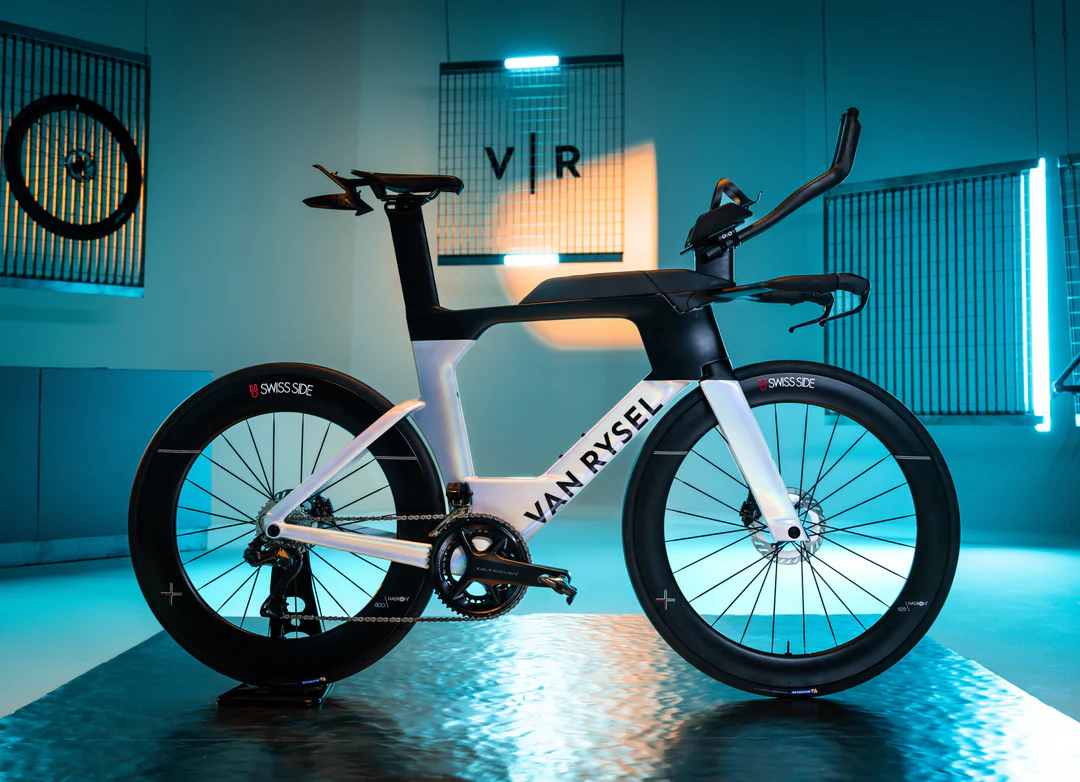
That changed when Van Rysel partnered with ONERA, the French aerospace lab equivalent to NASA. They didn’t just slap a logo on an open-mold frame; they engineered a chassis using the same computational fluid dynamics (CFD) used for Rafale fighter jets. The result is the Van Rysel RCR Pro. It is a bike that breaks the golden rule of cycling economics: Light, Aerodynamic, Cheap, pick two. Van Rysel picked all three.
The Deep Dive: The Superbike vs. The Incumbent
Let’s strip away the marketing fluff and look at the raw data. This is what a “serious athlete” cares about. We are comparing the Van Rysel RCR Pro (Ultegra Di2 / SRAM Force spec) against its direct market rival, the Specialized Tarmac SL8 Pro.
1. The Engine Room: Frame & Weight
- The Competitor: The Tarmac SL8 is widely considered the benchmark. It is light, stiff, and aero. A fully built SL8 Pro (Ultegra Di2) weighs in around 7.2 kg.
- The Van Rysel: The RCR Pro, in a comparable build, tips the scales at approximately 7.3 kg.
- The Verdict: You are talking about a 100 g difference, roughly the weight of a half-filled water bottle. For 99% of riders, even competitive amateurs, this is negligible.
2. The Spec Sheet Wars
This is where Decathlon lands its knockout punch.
- The Competitor ($11,000 – $12,000+ CAD): At this price point, legacy brands often cut corners. You might get the high-end frame, but you’ll find second-tier aluminum handlebars or house-brand wheels that are heavy and sluggish.
- The Van Rysel (~$7,000 – $8,000 CAD): Van Rysel spec’d the RCR Pro with Swiss Side wheels. Swiss Side is arguably the world leader in cycling aerodynamics (founded by former F1 engineers). To find these wheels on a stock Trek or Specialized, you usually have to jump to the $15,000+ “halo” tier. Furthermore, the cockpit is a collaboration with Deda, offering fully integrated cable routing that performs like a true superbike.
3. The “Ride Feel” Factor
The biggest skepticism from pros wasn’t about weight; it was about stiffness. Could a “store brand” bike handle the watts of a WorldTour sprinter? Reports from the peloton suggest the RCR Pro is actually stiffer in the bottom bracket than many of its more expensive rivals. This translates to immediate power transfer. When you stomp on the pedals, the bike surges. The trade-off? It can be a slightly harsher ride. While an SL8 might dampen road buzz like a luxury sedan, the Van Rysel communicates every crack in the pavement like a track car. For a racer, that’s feedback.
Why Pros Are Actually Switching
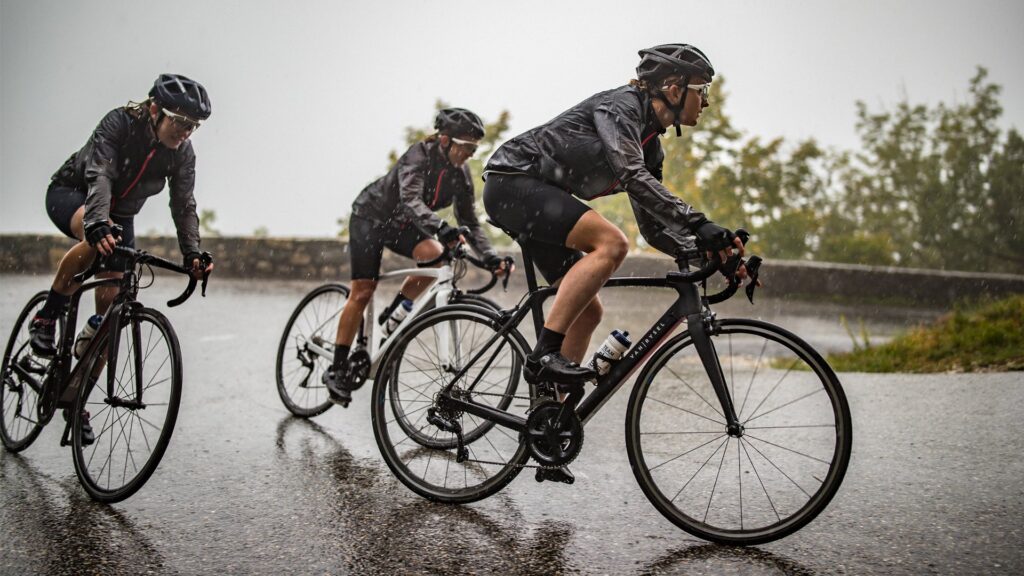
The “secret” switch isn’t just about sponsorship dollars. Pro mechanics and riders talk. They know that Decathlon has shortened the supply chain. By owning the entire process, from design in Lille to sales in their massive box stores, they cut out the distributor markup.
When a pro cyclist looks at a Van Rysel, they don’t see a budget bike. They see a tool that allows them to allocate their own budget elsewhere. For the privateer racer (the athlete who pays for their own gear), buying a Van Rysel means they have thousands of dollars left over. That’s a power meter, a coaching package for a year, and a week-long training camp in Mallorca. That price difference is the difference between owning a fast bike and becoming a fast rider.
The Verdict: The Snobbery Tax is Dead
For years, showing up to a group ride on a Decathlon bike earned you polite nods but zero respect. In 2026, showing up on a Van Rysel RCR Pro sends a different message. It says you did the math. It says you care more about wattage savings and Swiss engineering than brand prestige.
The incumbents are scrambling to justify their pricing, but the math is getting harder to fake. Van Rysel hasn’t just built a cheaper bike; they’ve built a mirror that reflects the uncomfortable truth of the cycling industry: We’ve been overpaying for stickers for a long, long time.
Gear up. The revolution is affordable, and it’s French.