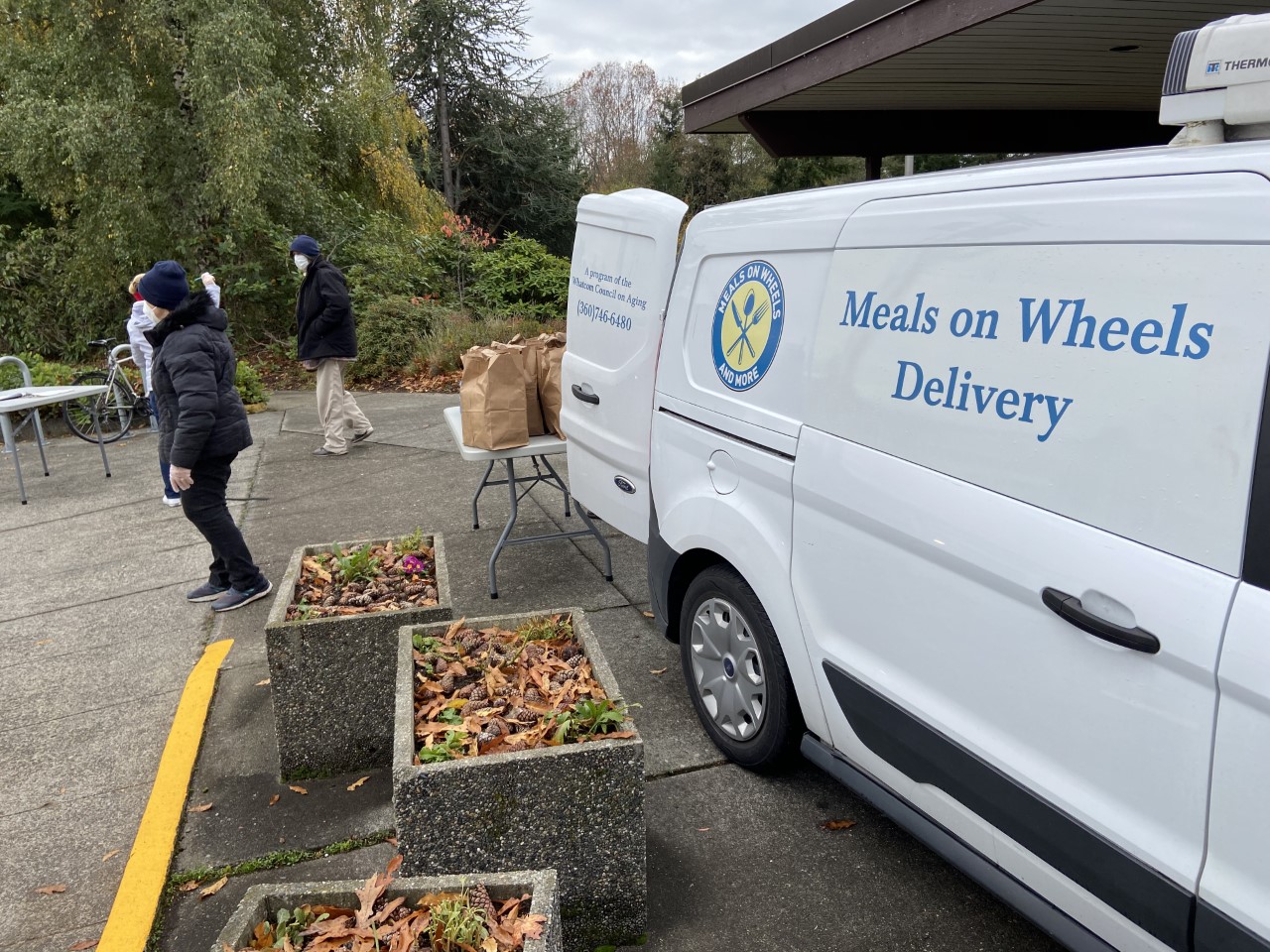
In thousands of homes across the country today, a similar scene will unfold. A television might be humming in the background to fill the silence. A clock ticks on the wall. A senior citizen sits, perhaps looking out the window, waiting for the one reliable event in their day. Then, it happens: a car door slams, footsteps approach the porch, and finally, a knock on the door.
It is lunchtime. But for millions of aging adults, the tray of food arriving is secondary. The primary nourishment comes from the brief, warm exchange with the volunteer standing on the threshold.
For decades, we have viewed Meals on Wheels primarily as a nutrition program—a logistical solution to the problem of senior hunger. This view, while accurate, is woefully incomplete. As we face what the U.S. Surgeon General has formally declared an “epidemic of loneliness and isolation,” it is time to recognize this service for what it truly is: a critical frontline defense in the battle for our society’s mental and emotional health. Meals on Wheels does not just deliver calories; it delivers connection. And in doing so, it saves lives.
The Anatomy of Isolation
To understand the value of that knock on the door, we must first confront the gravity of the silence behind it. We are living through a demographic shift often termed the “Silver Tsunami,” where the population of older adults is growing at an unprecedented rate. Yet, our social infrastructure has not kept pace.
Families are more geographically dispersed than ever before. The traditional multi-generational household has become a rarity. As mobility declines and driving becomes impossible, an older adult’s world shrinks to the four walls of their home. Friends pass away; spouses die. Slowly, the connections to the outside world sever, one by one.
The medical community has been ringing the alarm bells for years. Social isolation is not merely a sad emotional state; it is a physiological toxicity. Research has consistently shown that prolonged loneliness carries health risks comparable to smoking 15 cigarettes a day. It is linked to a 29% increased risk of heart disease, a 32% increased risk of stroke, and a 50% increased risk of dementia. Loneliness increases cortisol levels, disrupts sleep, and depresses the immune system.+2
In this context, a homebound senior is arguably in as much danger from isolation as they are from malnutrition. This is where the “More Than a Meal” model shifts from a charitable nicety to a medical necessity.
The Safety Net on the Threshold
The genius of the Meals on Wheels model lies in its consistent, human touch. Unlike a food drop-off service or a grocery delivery app, a Meals on Wheels delivery requires a face-to-face interaction. The volunteer is instructed not just to leave the bag and leave, but to greet the recipient, ask how they are doing, and make eye contact.
For many recipients, the volunteer is the only person they will see or speak to that day.
This interaction serves as a vital wellness check. Volunteers are the eyes and ears of the community. They are often the first to notice if a senior’s speech is slurred, if they look unusually frail, or if there is a hazard in the home like a gas leak or a tripping risk. There are countless documented instances where a Meals on Wheels volunteer arrived to find a senior who had fallen and been unable to get up, or who was suffering from a medical emergency. In these moments, the meal delivery becomes a life-saving intervention.
But even without an emergency, the “safety check” provides peace of mind to the families of these seniors. A daughter living three states away can sleep better knowing that someone—a real, caring human being—is going to knock on her father’s door at noon on Tuesday, check his welfare, and smile at him.
Nourishing the Soul
Beyond physical safety, there is the undeniable power of being known. In a world that often renders the elderly invisible, the volunteer validates the senior’s existence.
Consider the dynamic. These are not transactional relationships. Over weeks and months, volunteers and recipients learn about each other. They discuss the weather, the local sports team, or the grandkids. A volunteer might remember that Mrs. Robinson loves hearing about the local garden club, or that Mr. Lee worries about his cat.
This “micro-socialization” anchors the senior in the community. It reminds them that they are still a part of the social fabric. We often underestimate how much mental stimulation is derived from a simple five-minute conversation. It requires cognitive effort to listen, process, and respond. It requires emotional regulation to engage in pleasantries. These interactions are cognitive gymnastics that help delay the onset of cognitive decline.
Furthermore, the reciprocity of these relationships is profound. Volunteers often report that they get as much out of the visits as the seniors do. In a fractured society, these threshold moments bridge the generational divide, fostering empathy and understanding between demographics that rarely mix.
The Economics of Compassion
From a purely pragmatic, economic standpoint, the argument for bolstering these programs is ironclad. The cost of supporting a senior through Meals on Wheels for an entire year is roughly equivalent to the cost of one day in a hospital or ten days in a nursing home.
When we combat loneliness, we combat the expensive health outcomes associated with it. By ensuring a senior is eating nutritious food and having their social needs met, we drastically reduce the likelihood of falls, emergency room visits for dehydration, and hospital readmissions.
“Aging in place”—the ability for seniors to remain in their own homes rather than moving to institutional care—is the goal for the vast majority of older adults. It is also the most cost-effective solution for the healthcare system. Meals on Wheels is the linchpin that makes aging in place possible. Without that daily visit, the risks of living alone often become too great, forcing seniors into assisted living facilities prematurely.
The Looming Challenge
Despite the proven efficacy of this model, the system is under strain. Funding for senior nutrition programs has not kept pace with inflation or the rapid growth of the aging population. Rising food costs and gas prices impact the ability of local programs to operate.
Moreover, the “epidemic of loneliness” requires an army to fight it. Programs are constantly in need of volunteers. The irony is that as our digital connectivity increases, our physical availability seems to decrease. We are too busy to knock on a door, yet we scroll for hours connecting with strangers.
To truly address the crisis, we need a cultural shift. We need to view the support of our elderly neighbors not as the responsibility of “the government” or “charity,” but as a civic duty. We need to innovate—integrating technology where helpful (such as video chat companions) but never letting it replace the physical presence that is so deeply craved.
Conclusion: A Call to Connection
We must stop thinking of food and companionship as separate categories of need. For the human animal, they have always been inextricably linked. We break bread together. We gather at tables. To eat alone, day after day, in silence, is a profound denial of our social nature.
Meals on Wheels restores that link. It acknowledges that a human being needs proteins and vitamins, yes, but they also need dignity, recognition, and the warmth of a smile.
The next time you see a volunteer car loaded with insulated thermal bags, remember that they are carrying more than mashed potatoes and green beans. They are carrying hope. They are the remedy to a silence that has grown too loud in too many American homes.
The epidemic of loneliness is daunting, but the cure is surprisingly accessible. It doesn’t require pharmaceutical breakthroughs or billion-dollar tech infrastructures. It starts with a meal, a car, and a willingness to knock. It starts with us.