Every small business owner eventually faces the exact same critical bottleneck: figuring out how to actually get paid. You can have the most innovative product, the sharpest branding, and a flawless marketing strategy, but if your checkout process is clunky, expensive, or unreliable, your business will bleed revenue.
Consider the sheer diversity of the modern entrepreneurial landscape. One founder might be launching a tech-enabled waste management service, requiring the ability to invoice commercial clients and accept payments securely out in the field. Another might be focused entirely on creating and selling digital products online, relying heavily on seamless e-commerce integrations and automated digital delivery. Despite having completely opposite operational models, both of these businesses share a fundamental requirement: a payment processor that is secure, reliable, and scalable.
For the last decade, one name has dominated the small and medium-sized business (SMB) conversation: Square.
But before you sign up and order your card reader, you need to understand exactly how payment solutions operate under the hood. Choosing a payment processor is like choosing a business partner, they will take a cut of your hard work, and their infrastructure will dictate how smoothly your day-to-day operations run.
Here is a deep dive into everything you need to know about choosing a payment solution, viewed through the lens of the industry heavyweight, Square.
The Core Concept: PSPs vs. Traditional Merchant Accounts
Before analyzing Square’s specific features, you must understand what Square actually is.
Historically, to accept credit cards, a business had to apply for a traditional merchant account through a bank. This involved rigorous credit checks, underwriting, long-term contracts, and complex fee structures. It was a massive barrier to entry for a new entrepreneur.
Square revolutionized this by operating as a Payment Service Provider (PSP), also known as a payment aggregator. Instead of setting up a unique merchant account for your specific business, Square holds one giant merchant account and processes your transactions underneath its umbrella.
- The Benefit: Frictionless onboarding. You can download the app, create an account, and start accepting payments in ten minutes with virtually zero paperwork.
- The Trade-off: Because Square assumes the financial risk of millions of un-underwritten micro-merchants, their risk-management algorithms are notoriously trigger-happy. If your transaction volume suddenly spikes, or if you process an unusually large invoice, Square’s automated systems might freeze your funds while they investigate for fraud.
Understanding this aggregator model is the first step in deciding if Square is right for your business.
The Hardware Ecosystem: Built for Every Countertop
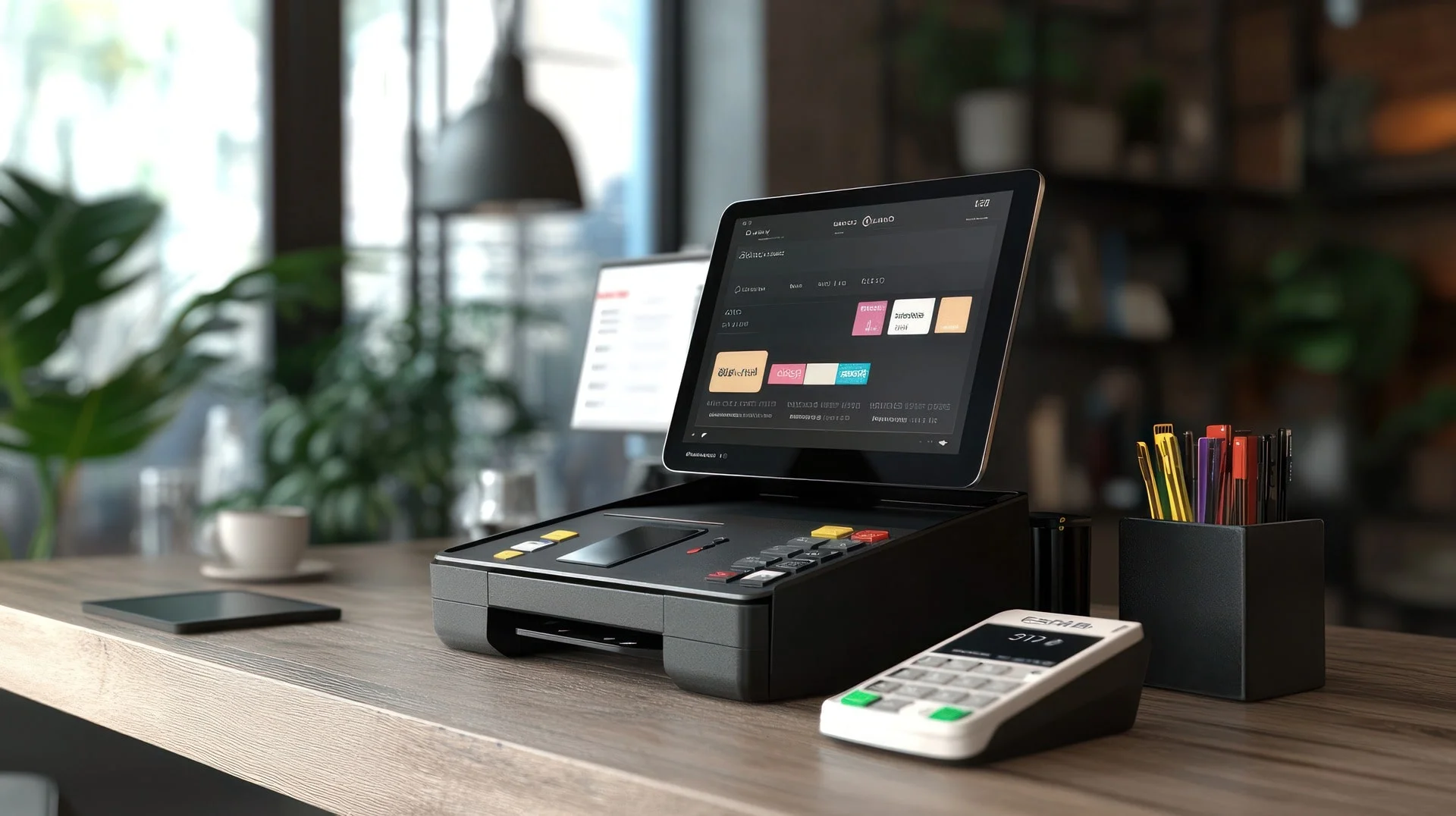
One of the main reasons SMBs flock to Square is its sleek, proprietary hardware. Unlike clunky legacy credit card machines that look like calculators from the 1990s, Square’s hardware is designed to sit proudly on a modern countertop or travel easily in a pocket.
1. The Square Reader
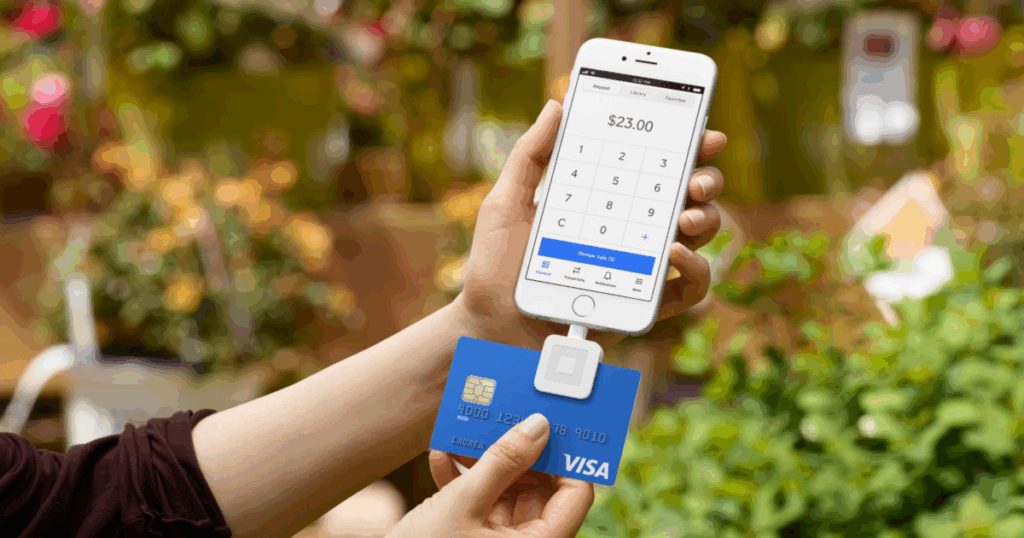
The entry-level device that started it all. The current iteration connects wirelessly via Bluetooth to your smartphone or tablet, allowing you to accept chip cards and contactless payments (like Apple Pay and Google Pay). At around $59, it is the ultimate low-risk entry point for mobile service providers, pop-up shops, and market vendors.
2. The Square Stand
Priced around $149, the Stand transforms an ordinary iPad into a full-fledged Point of Sale (POS) system. It features a built-in card reader and swivels to face the customer for easy PIN entry and tipping. It is the gold standard for independent coffee shops and boutique retail stores.
3. The Square Terminal
If you prefer an all-in-one device that doesn’t rely on a separate iPad or smartphone, the $299 Square Terminal is a powerhouse. It features a built-in touchscreen, processes all payment types, and importantly, includes a built-in receipt printer. It is highly favored by full-service restaurants for tableside payments and medical or beauty professionals.
4. The Square Register
At $799, this is Square’s flagship, fully integrated system. It features a large touchscreen for the cashier and a dedicated customer-facing display. It requires no tablets or third-party apps and is built for high-volume retail environments that need a permanent, robust checkout station.
Beyond the Swipe: The Software Capabilities
Hardware is just the physical bridge; the real magic of a payment solution lies in its software. Square has aggressively transitioned from being just a “credit card reader company” to a comprehensive operating system for small businesses.
The Point of Sale (POS) App
The core Square POS app is completely free to use. It allows you to build an item library, track stock levels, and generate sales reports. You only pay when you process a transaction. For many early-stage businesses, this free software is robust enough to run the entire operation.
E-Commerce and Digital Sales
If your focus is online, such as selling digital downloads or running a remote consultancy, Square seamlessly integrates with website builders like Wix, WooCommerce, and its own Square Online platform. You can generate payment links, set up recurring billing for subscriptions, and manage digital inventory directly from the centralized dashboard.
Invoicing
For B2B services, the ability to send professional, trackable invoices is crucial. Square Invoices allows you to send estimates, request deposits, and track when a client views and pays the bill. The funds integrate instantly into your Square dashboard, consolidating your in-person and online revenue streams into one clear financial picture.
Specialized Industry Software
As businesses grow, their software needs become more complex. Square offers paid, specialized tiers:
- Square for Retail: Advanced inventory management, purchase orders, and vendor tracking.
- Square for Restaurants: Floor plan management, coursing, and kitchen display system (KDS) integration.
- Square Appointments: Built-in scheduling, calendar management, and no-show protection for service professionals.
The True Cost: Decoding the Fees
The most critical factor in choosing a payment solution is understanding exactly what it costs. Payment processing is a volume game, and the math can get tricky.
Square operates on a flat-rate pricing model. This is excellent for predictability but can become expensive as you scale.
Here is a general breakdown of standard Square fees:
- In-Person Transactions (Swipe, Dip, Tap): Generally 2.6% + 10¢ (or 15¢ depending on the specific hardware/plan) per transaction.
- Online Transactions (E-commerce): 2.9% + 30¢ per transaction.
- Keyed-In Transactions (Manual Entry): 3.5% + 15¢ per transaction. (This rate is the highest because manually entered cards carry the highest risk of fraud).
- Invoices: 3.3% + 30¢ if paid by credit card (ACH bank transfers often carry lower or zero fees depending on your setup).
The Flat-Rate Trap:
Flat-rate pricing is highly beneficial if your average ticket size is small (like a $4 coffee) or if you are processing under $10,000 a month. However, if your business is generating $250,000 or more in annual card volume, Square’s flat rate will likely cost you significantly more than a traditional processor that uses “Interchange-Plus” pricing (where you pay the wholesale card network rate plus a tiny, transparent markup).
If you are a high-volume business, the convenience of Square might not be worth the premium you are paying in processing fees.
The Dark Side: The Risks of the Platform
To make an informed decision, you must look at the drawbacks of the platform. Square is not without its flaws, and for certain businesses, these flaws can be catastrophic.
1. Account Freezes and Holds
As mentioned earlier regarding the aggregator model, Square’s fraud algorithms are aggressive. If you usually sell $20 items and suddenly process a $5,000 transaction, the system may flag your account, freeze the funds, and demand proof of the transaction (invoices, shipping receipts). Resolving these holds can take days or weeks, severely crippling a small business’s cash flow.
2. Customer Support Limitations
When your payment processor goes down, you are losing money by the second. Square’s customer support is often cited as a weak point in user reviews. While they offer phone support during business hours for active accounts, reaching a human being quickly during an unexpected crisis can involve navigating frustrating chatbot mazes and lengthy hold times.
3. Not for High-Risk Industries
If your business operates in a “high-risk” sector (which can include everything from CBD products and adult entertainment to certain types of travel bookings and telemedicine), Square will not process your payments. If they discover you are selling prohibited items, they will shut down your account immediately without warning.
The Final Verdict: Is Square Right for You?
Choosing a payment solution is about matching the tool to your current operational maturity.
You should choose Square if:
- You are a startup, a solopreneur, or a small business looking for the easiest, fastest way to start accepting payments.
- You value beautiful, intuitive hardware and want a cohesive ecosystem where your POS, inventory, and invoices live in one app.
- You prioritize predictable, flat-rate fees over the complexity of negotiating wholesale interchange rates.
You should look elsewhere if:
- You run a high-volume business (processing over $250k/year) where fractions of a percent in processing fees equate to tens of thousands of dollars in lost margin.
- You operate in a high-risk industry or process unusually large, irregular B2B invoices that might trigger automated account freezes.
- You demand 24/7, immediate white-glove customer support via phone.
Your payment processor is the financial foundation of your enterprise. Take the time to run the numbers, assess your average transaction size, and weigh the value of convenience against the reality of processing fees.