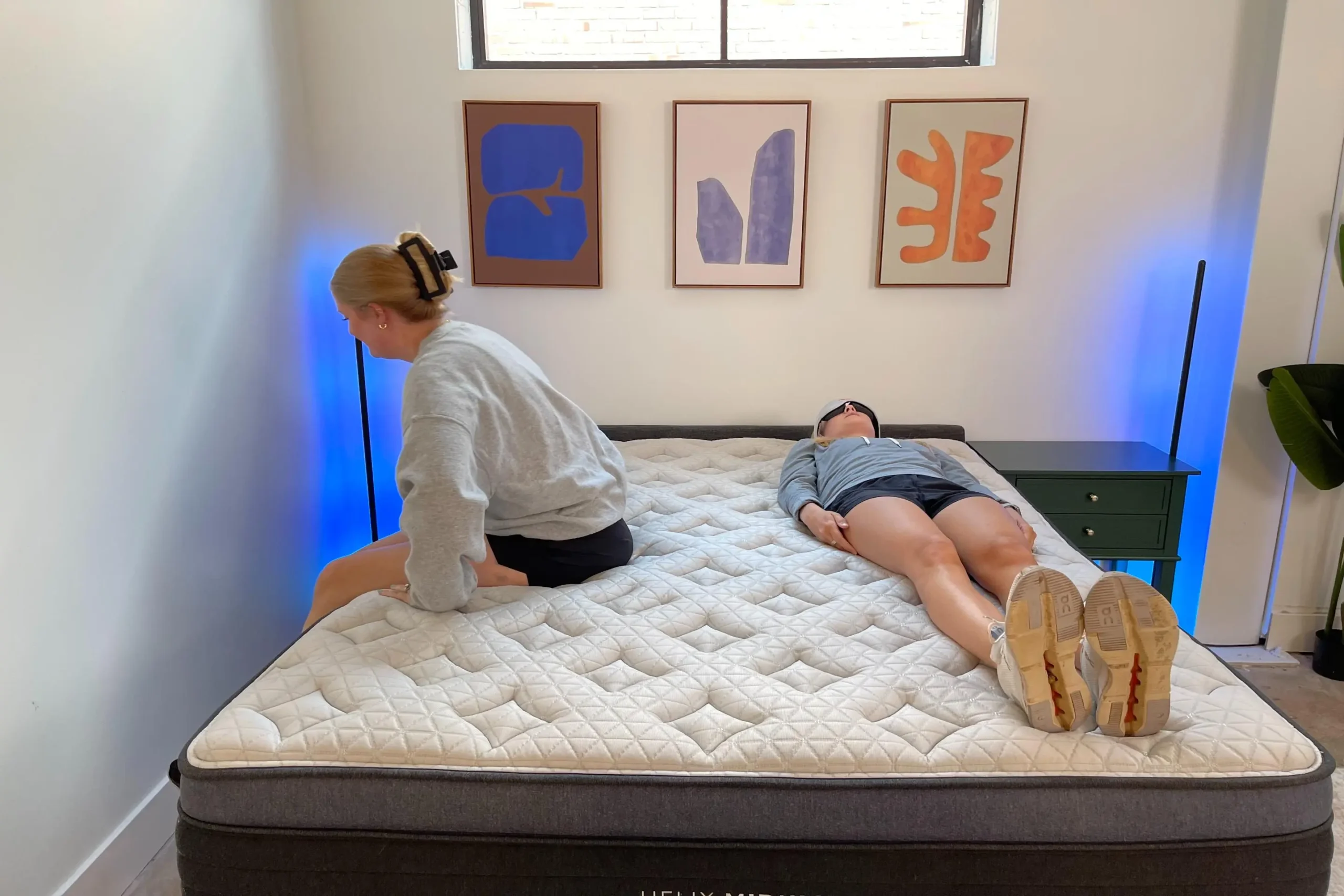
Picture this scenario: After months of waking up with an aching back and a groggy mind, you finally decide it is time to upgrade your sleep. You do your research, read the reviews, visit the showrooms, and pull the trigger on a premium, state-of-the-art mattress. It boasts individually wrapped coils, targeted lumbar support, and phase-change cooling gel foam. It costs as much as a used car, but you justify the expense. After all, you spend a third of your life in bed, right?
Delivery day arrives. The mattress is set up. You make the bed, turn off the lights, and lie down expecting a transcendent, cloud-like experience.
But then, 2:00 AM rolls around.
You are awake. You are kicking one leg out from under the covers. You flip the pillow to the cool side, but the relief only lasts for three minutes. Your brand-new, multi-thousand-dollar bed feels less like a cloud and more like a high-end sauna. Frustrated, you wonder if you bought the wrong mattress, if the “cooling gel” was just a marketing scam, or if your body’s internal thermostat is completely broken.
Before you initiate a complicated mattress return, take a hard look at what is sitting on top of that expensive bed. The uncomfortable truth is that millions of homeowners unwittingly sabotage their high-end mattresses every single night. The secret to your tossing and turning isn’t the foundation you are sleeping on; it is the fabric you are wrapped inside.
The Great “Microfiber” Deception
Human beings are prone to an interesting psychological quirk when it comes to budgeting. We will happily spend $2,000 on a core piece of hardware (like a mattress), but by the time we get to the accessories (like sheets), our budget fatigue sets in. We hop online, search for “softest sheets,” and buy a $25 set with 50,000 positive reviews boasting about a luxurious “microfiber” feel.
Here is the candid reality: “Microfiber” is a clever marketing term for polyester. And polyester is, essentially, woven plastic.
When you cover a technologically advanced, breathable mattress in a layer of synthetic plastic, you are creating an impermeable heat trap. You wouldn’t wear a plastic garbage bag to run a marathon and expect your skin to breathe. Yet, that is exactly the microclimate you create when you sleep wrapped in cheap synthetic sheets.
Your mattress could be engineered by NASA scientists to dissipate body heat, but if that heat cannot pass through your sheets to reach the mattress in the first place, the technology is rendered completely useless. The heat bounces off the polyester, remains trapped against your skin, and slowly cooks you in your own body heat.
The Hierarchy of a Good Bed Setup
To truly understand how to optimize your sleep environment, you need to view your bed not as a single piece of furniture, but as an interconnected ecosystem. Every layer plays a distinct role in structural support, hygiene, and thermal regulation. If one layer fails, the entire system collapses.
Here is the definitive hierarchy of a proper bed setup:
1. The Mattress (The Foundation)
Your mattress is the structural foundation of your sleep. Its primary jobs are spinal alignment, pressure point relief, and motion isolation. While modern mattresses incorporate cooling technologies, their primary function is ergonomic, not atmospheric. They are the engine of your bed, but they need proper ventilation to avoid overheating.
2. The Protector (The Unsung Hero)
This is where the system often experiences its first failure. A mattress protector is essential for hygiene, keeping dead skin cells, sweat, and dust mites out of your expensive investment. However, if you buy a cheap, vinyl-backed, waterproof protector, you have just laid a literal sheet of plastic over your bed. It will protect the mattress from spills, but it will also reflect 100% of your body heat right back at you. A high-quality protector must be a waterproof yet breathable membrane—one that allows air and heat to flow down into the mattress without letting liquids seep through.
3. The Sheets (The Skin Contact Layer)
This is the most intimate layer of your sleep setup. Your sheets dictate your immediate microclimate. Because they are in direct contact with your skin, their moisture-wicking and breathability capabilities are paramount. For decades, consumers believed the “Thread Count Myth”—the idea that a higher thread count equaled better sheets. In reality, cramming 1,000 threads into a square inch of cotton creates an incredibly dense, heavy fabric that restricts airflow. Hot sleepers don’t need denser fabrics; they need smarter, high-performance fabrics designed for thermal conductivity and moisture management.
4. The Comforter or Duvet (The Climate Control Roof)
If your sheets are the walls of your microclimate, your comforter is the roof. The job of a comforter is insulation, but proper insulation requires ventilation. Traditional down can be wonderfully warm but notoriously bad at releasing excess heat. Synthetic polyester fills, much like microfiber sheets, turn your bed into a slow cooker. The ideal top layer provides a comforting weight without acting as a thermal blockade.
The Biology of Sleep and Temperature
Why does all this layering matter so much? It comes down to human biology.
To initiate sleep, and more importantly, to stay in deep, restorative REM sleep, your core body temperature needs to drop by about one to two degrees Fahrenheit. As your core temperature drops, your body radiates that excess heat out through your skin.
If your bed setup (the protector, sheets, and comforter) is not breathable, that radiated heat has nowhere to go. The ambient temperature around your skin rises. Your brain detects this rising heat and interprets it as a signal to wake up. This is the physiological trigger behind your 2:00 AM tossing, turning, and night sweats. You aren’t waking up because your mattress is uncomfortable; you are waking up because your brain thinks you are overheating and is trying to save you.
Re-evaluating Your Investment
If you have already invested heavily in your mattress, you need to protect that investment by matching its quality with your top layers. Treating your bedding as an afterthought is the equivalent of buying a high-performance sports car and putting cheap, bald tires on it. The engine works fine, but the ride will be miserable.
The good news is that textile technology has advanced lightyears beyond traditional cotton and cheap synthetics. Today, the focus is on performance fabrics, materials specifically engineered to draw heat away from the body and wick away moisture before it turns into sweat.
This is where specialized brands come into play. A brand like Rest understands that thermoregulation is the missing link in the modern sleep industry. Rather than relying on outdated metrics like thread count, the focus has shifted to advanced fabric engineering, thermal conductivity, and tangible, sensory coolness. When you touch high-performance cooling sheets, they actually feel cool to the touch, not because they are refrigerated, but because they are highly efficient at absorbing and dispersing ambient heat.
Upgrading your sheets and comforter to performance materials requires a paradigm shift. It means recognizing that your bed isn’t just a place to lie down; it is a recovery tool. When your mattress, protector, sheets, and comforter work in harmony, they create a breathable, temperature-neutral environment. Your core temperature drops, your skin stays dry, and you finally achieve that elusive, uninterrupted eight hours of sleep.
The next time you find yourself kicking off the covers in the middle of the night, don’t blame the mattress beneath you. Look at the fabric wrapped around you. A minor adjustment to your top layers is often all it takes to unlock the true potential of your bed.
If you’ve optimized your mattress and your room is still feeling like a sauna at 2 AM, it’s time to look at your fabric. Upgrading your top layers can instantly transform your sleep environment. Rest specializes in scientifically proven, third-party-tested cooling bedding designed specifically for hot sleepers. From their signature Evercool® Comforters to their breathable sheet sets, you can explore their full catalog and finally put an end to night sweats.