As we move into the winter of 2026, the global forecast suggests we are in for a season of extremes. Whether you are chasing the Northern Lights in the Arctic Circle, planning a ski trip to the Himalayas, or simply enduring a harsher-than-usual winter in the city, the cold does not negotiate. It finds every gap, every exposed inch of skin, and every weakness in your wardrobe.
However, freezing to death—or just being miserably uncomfortable—is rarely a result of the temperature itself. It is almost always a failure of strategy.
The difference between shivering in a thick, expensive coat and standing comfortably on a glacier in a thin-looking ensemble is layering. It is the fundamental science of thermodynamics applied to clothing. In 2026, fabric technology has advanced to the point where we no longer need to look like overstuffed marshmallows to stay warm. We just need to be smarter.
This guide breaks down the definitive “Base + Mid + Shell” system. We will strip away the marketing fluff and focus on the physics of warmth, helping you build a kit that can handle anything from a brisk morning walk to a sub-zero blizzard.
Phase 1: The Base Layer (The Moisture Manager)
The most common mistake people make is thinking the layer touching their skin should be the warmest. It shouldn’t. It should be the driest.
Your base layer is your “second skin.” Its primary job is not insulation; it is moisture management. When you move, you sweat—even in sub-zero temperatures. If that sweat sits on your skin and cools down, it becomes a conductive layer that saps your body heat 25 times faster than air. This is the “flash-off” effect that leads to hypothermia.
The Rules of the Base
- Cotton is the Enemy: Never, under any circumstances, wear a cotton t-shirt as a base layer in freezing conditions. Cotton absorbs moisture and holds it. It kills thermal efficiency.
- The Fit Matters: A base layer must be snug. If it is loose, sweat has to turn into vapor to bridge the gap to the fabric, which takes energy (heat) from your body. It needs to touch you to wick effectively.
The Materials: Merino vs. Synthetic
- Merino Wool: The gold standard. It is naturally antimicrobial (won’t stink after three days of wear) and retains heat even when wet. Look for 200gsm (grams per square meter) for general winter use.
- Synthetics: Polyester blends are durable and wick moisture faster than wool, though they tend to retain odors. They are excellent for high-output activities like skiing or running.
The Gear Strategy: Uniqlo HEATTECH
For the modern traveler, the undisputed king of accessible base layer technology is Uniqlo. Their HEATTECH line has revolutionized how we dress for winter by turning moisture into heat.
Using bio-warming technology, the fabric actually generates heat from the moisture evaporating from your body. It’s thin, non-intrusive, and surprisingly effective.
- For City/Office: Stick to the standard HEATTECH. It’s thin enough to wear under a dress shirt or jeans without adding bulk.
- For the Outdoors: Upgrade to HEATTECH Extra Warm or Ultra Warm. The Ultra Warm line is roughly 2.25 times warmer than the standard model and features a brushed interior that traps more air.
If you are shopping in regions where Uniqlo isn’t accessible, marketplaces like Noon offer a wide variety of thermal sets that mimic this technology. Look for “thermal underwear sets” with a high polyester-spandex mix to ensure that critical snug fit.
Phase 2: The Mid Layer (The Furnace)
If the base layer is the foundation, the mid layer is the furnace. This is where the magic happens. The purpose of this layer is simple: trapping dead air.
Your body generates heat (approximately 100 watts at rest, much more when active). The mid layer’s job is to catch that heat and prevent it from escaping into the atmosphere. The “fluffier” or loftier the material, the more air it traps, and the warmer you stay.
The Options
- Fleece: The workhorse of the mid-layer world. Fleece (essentially synthetic wool) is breathable, dries quickly, and is incredibly durable. A 100-weight fleece is good for movement; a 300-weight fleece is for sedentary warmth.
- Down Jackets: Pound for pound, nothing beats goose down for warmth. Down feathers create a chaotic 3D structure that traps massive amounts of air. The metric to watch here is “Fill Power.” 600 is standard; 800+ is technical grade.
- Synthetic Insulation: This mimics down but uses plastic fibers. The advantage? It stays warm if it gets wet (down collapses and loses warmth when soaked).
The Strategy: Adaptability
The beauty of the mid layer is versatility. In 2026, we are seeing a trend toward “active insulation”—jackets that dump heat when you run but trap it when you stop.
For a static layering system (e.g., watching a football game or ice fishing), a heavy down vest or jacket is your best bet. However, if you are hiking, you might overheat in down. In that case, a grid-fleece pullover is superior because it allows airflow while still providing insulation.
Phase 3: The Outer Shell (The Shield)
You are dry (thanks to your base) and you have trapped your body heat (thanks to your mid). Now, you need to protect that delicate ecosystem from the violence of the environment.
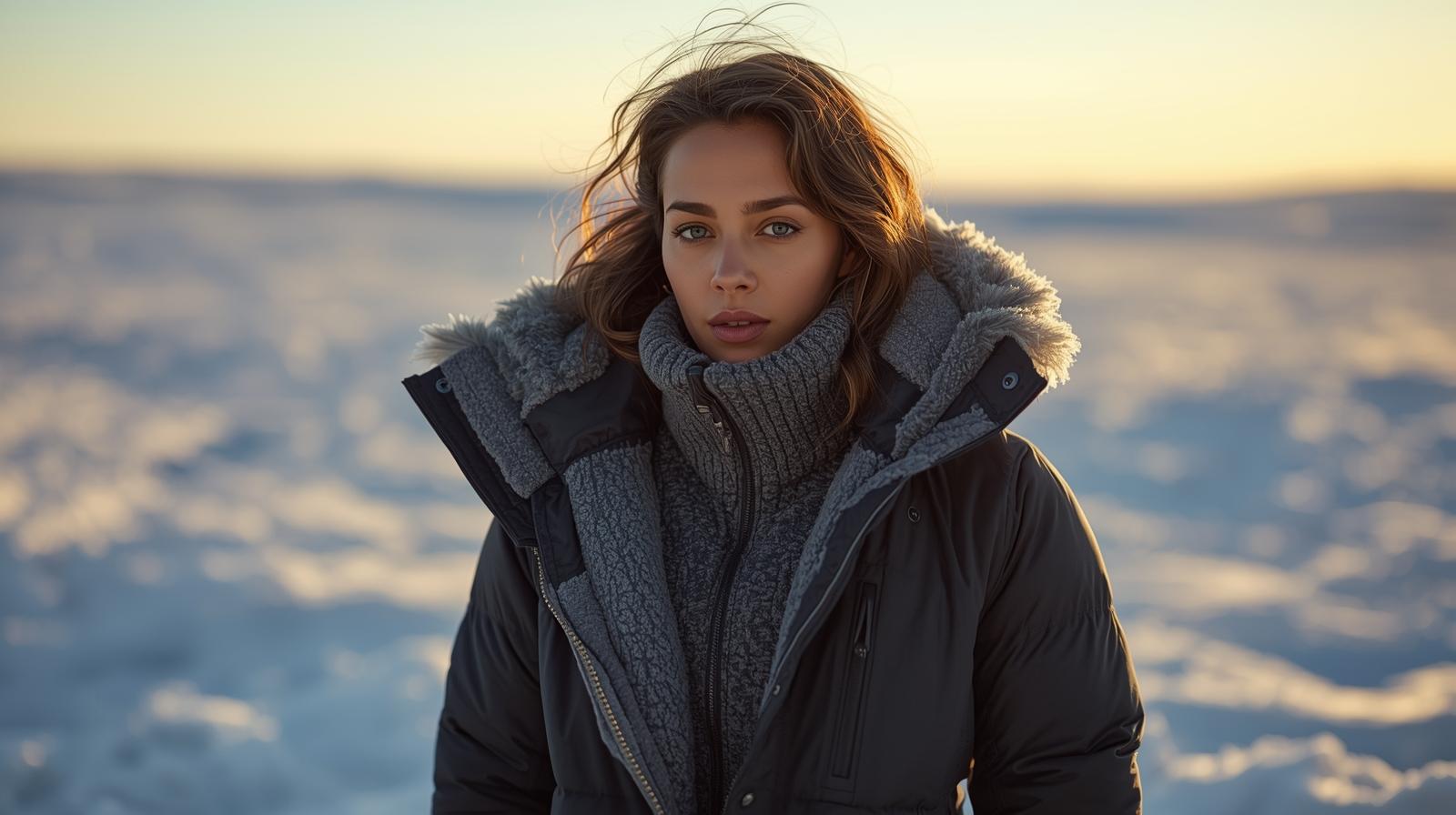
The outer shell is your barrier against wind, rain, snow, and abrasion. Without a shell, the wind will strip away the warm air trapped in your mid layer (the “wind chill” effect), rendering your fleece useless.
Hard Shells vs. Parkas
- Hard Shell: A thin, waterproof, windproof jacket with zero insulation. It is purely for protection. You wear this over your fleece/down.
- The Parka: This combines the mid layer and shell into one heavy-duty unit.
The Gear Strategy: Cabela’s and Bass Pro Shops
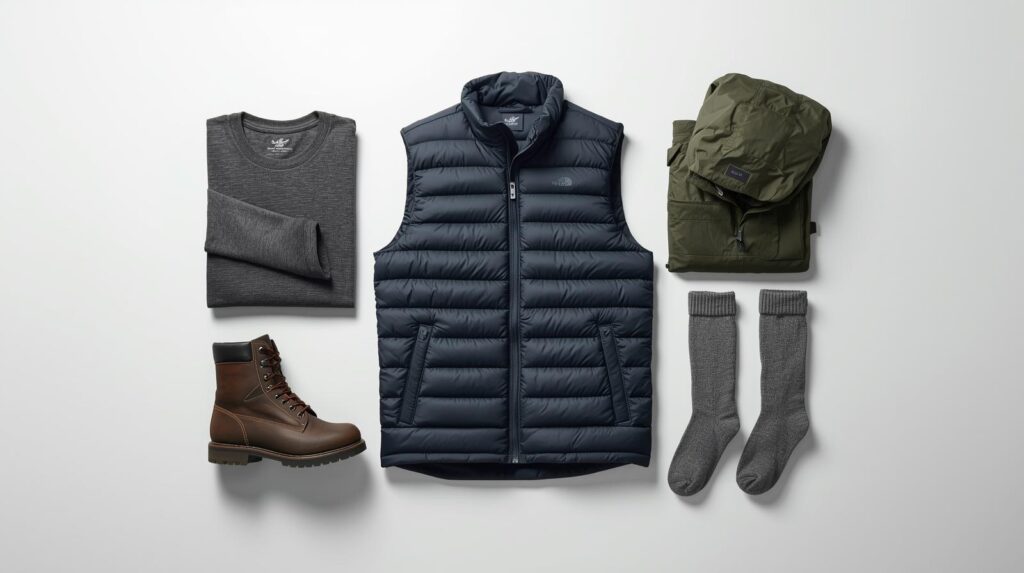
When you are dealing with sub-zero temperatures—conditions where machinery fails and batteries die—you don’t want fashion; you want heritage durability. This is where retailers like Bass Pro Shops and Cabela’s excel.
They specialize in gear designed for hunters and anglers who sit motionless in freezing conditions for hours. If a coat can keep a hunter warm in a tree stand at -20°F, it can handle your winter commute.
Look for their proprietary Gore-Tex Parkas or heavy-duty insulated bibs.
- Durability: Unlike lightweight hiking brands, Cabela’s gear often uses heavy denier nylon faces. You can walk through thorns, scrape against ice, or sit on rough concrete, and the gear holds up.
- The “Wishlist” Items: Focus on the Cabela’s Guidewear series or the RedHead line. These parkas often come with excessive pockets (great for storing batteries to keep them warm), storm flaps over zippers, and high collars that eliminate the need for a scarf. They are investments in survival.
Phase 4: The Extremities (Legs, Hands, and Eyes)
You lose a significant amount of heat through your head, yes, but your legs are giant radiators that often go ignored. Wearing jeans in the snow is a recipe for misery; denim absorbs water and freezes stiff.
The Lower Half
You need the same system for your legs: a thermal legging (Uniqlo/Noon) followed by a protective trouser. For high-output activities like skiing or even winter trekking, you need specialized trousers.
The Gear Strategy: Decathlon
Ski gear is notoriously expensive, but it doesn’t have to be. Decathlon has democratized the slopes with their Wedze brand.
- Ski Pants: Look for the Wedze 500 or 900 series. These pants offer waterproofing (usually 10,000mm to 20,000mm ratings), integrated gaiters (to stop snow getting into your boots), and zippered vents. They are fractionally priced compared to luxury ski brands but offer 90% of the performance.
- Goggles: Snow blindness is real. In high altitudes or bright snowy conditions, UV rays hit you from above and reflect from below. Decathlon’s Wedze goggles offer anti-fogging coatings and 100% UV protection. They are an essential piece of safety kit, not just a fashion accessory.
Conclusion: The Art of the System
Layering is not just about piling on clothes; it is about creating a customizable climate control system for your body.
- Too hot? Unzip the shell or remove the mid-layer.
- Too cold? Add a vest.
- Too windy? Cinch the hood of your Cabela’s parka.
In 2026, there is no such thing as bad weather—only bad gear. By investing in the right base (Uniqlo), a durable shield (Bass Pro/Cabela’s), and technical essentials (Decathlon), you unlock the ability to enjoy the winter rather than just endure it.
Get your kit sorted now. The mercury is dropping.