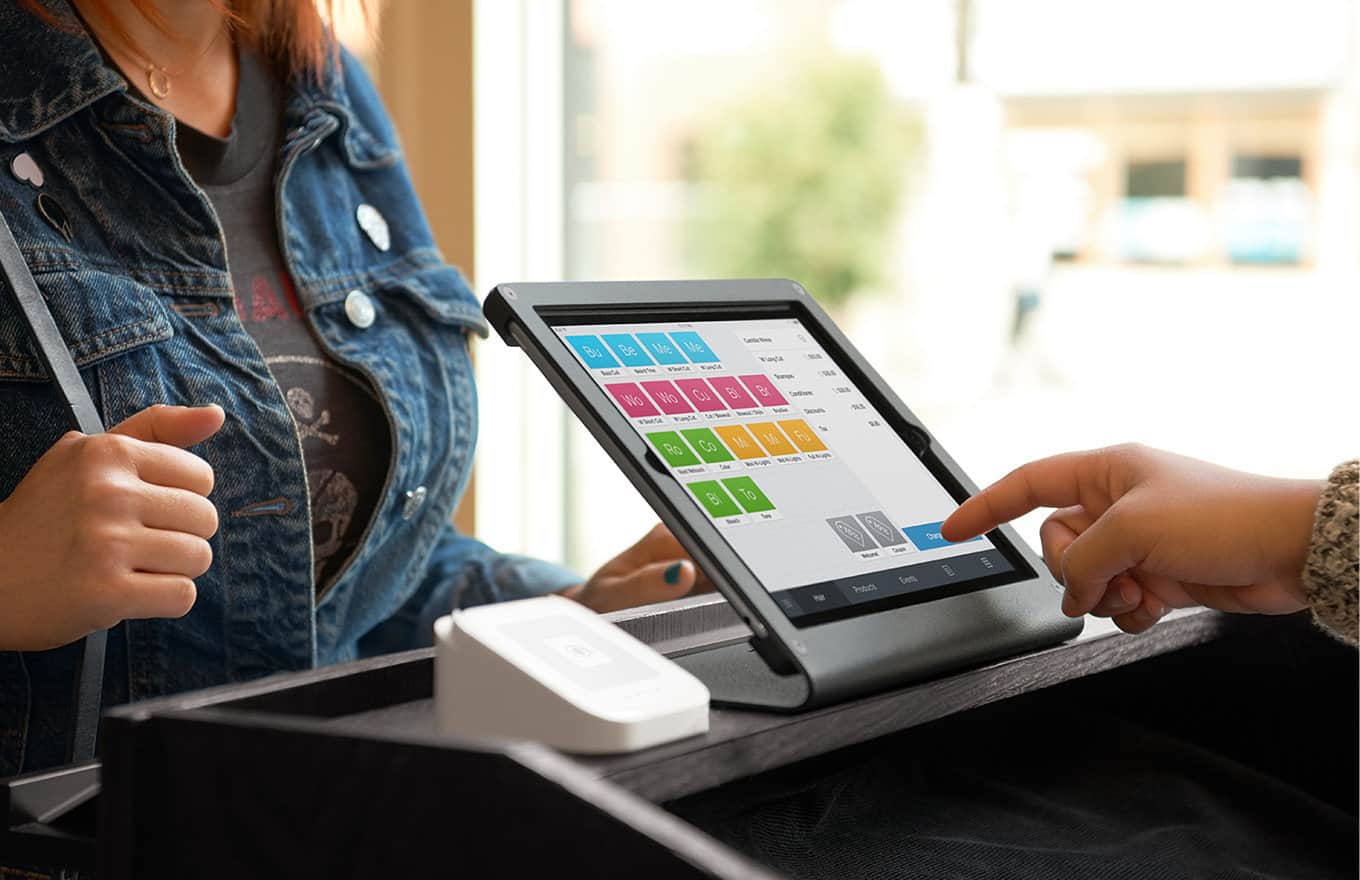
If you are a small business owner, you already know that your Point of Sale (POS) system is no longer just a digital cash register. It is the central nervous system of your entire operation. A modern POS tracks your inventory, manages your employees, builds customer loyalty, and ultimately dictates how smoothly your day-to-day operations run.
However, shopping for a POS system can feel like navigating a minefield. With complex fee structures, proprietary hardware, and confusing software tiers, it is easy to end up locked into a system that either drains your margins or lacks the tools you actually need.
To help you cut through the noise, we have compiled the definitive list of the top 10 POS systems on the market. We are placing industry giant Square right alongside heavy-hitting competitors like Clover, Toast, and Lightspeed, breaking down their features, pricing, and integrations so you can make an informed, confident choice.
What Makes a Great POS System?
Before diving into the list, it is crucial to understand that there is no “perfect” POS system—only the right one for your specific business. When evaluating these options, we looked at three core pillars:
- Features: Does it have industry-specific tools (like table mapping for restaurants or matrix inventory for retail)?
- Pricing: Is the pricing transparent? We looked at monthly software fees, hardware costs, and, crucially, payment processing rates.
- Integrations: Does it play nice with the software you already use, like QuickBooks, Mailchimp, or your e-commerce platform?
Here are the top 10 POS systems that stand out in the current landscape.
1. Square: The Best All-Rounder
Square revolutionized the payment industry by democratizing access to credit card processing. Today, it remains the gold standard for versatility and ease of use. It is highly accessible, making it an ideal starting point, but it scales surprisingly well for growing businesses.
- Best For: New businesses, food trucks, pop-up shops, and multi-channel retailers.
- Key Features: Intuitive interface, free basic online store, robust analytics, and built-in employee management. Square also offers industry-specific software: Square for Retail and Square for Restaurants.
- Pricing: The basic POS software is free. You only pay standard processing fees (typically around 2.6% + 10¢ per tap/dip). Premium industry-specific tiers start at roughly $60/month.
- Integrations: Massive App Marketplace. Seamlessly integrates with QuickBooks, Xero, Mailchimp, Homebase, and Wix.
2. Clover: The Hardware Heavyweight
If Square is the software darling, Clover is the hardware king. Owned by Fiserv, Clover offers some of the sleekest, most durable, and professional-looking proprietary hardware on the market. It operates on a closed Android-based system and is incredibly customizable.
- Best For: Established brick-and-mortar retail and quick-service restaurants looking for an all-in-one hardware solution.
- Key Features: Lightning-fast processing, offline mode, fingerprint login for staff, and a highly customizable app interface.
- Pricing: Hardware is an upfront investment (ranging from a few hundred dollars for the Clover Flex to over $1,500 for the Station Duo). Software plans vary by your merchant service provider but generally start around $14.95/month. Processing fees depend on your specific merchant agreement.
- Integrations: The Clover App Market is extensive, offering integrations for Gusto, Yelp, QuickBooks, and Shopify.
3. Toast: The Restaurant Specialist
Toast doesn’t care about retail; it is relentlessly focused on the food and beverage industry. Built on an Android operating system, Toast offers hardware designed to withstand the heat, grease, and spills of a busy commercial kitchen.
- Best For: Full-service restaurants, bars, cafes, and bakeries.
- Key Features: Kitchen Display Systems (KDS), tableside ordering, menu management, split checks, and integrated online ordering and delivery routing.
- Pricing: Offers a “Pay-as-you-go” starter kit with no upfront hardware or monthly software costs (but higher processing rates). Standard plans start at roughly $69/month, plus hardware costs.
- Integrations: deeply integrates with restaurant-specific tools like 7shifts, Sling, Grubhub, UberEats, and OpenTable.
4. Lightspeed: The Inventory Master
Lightspeed is a powerhouse for businesses with complex, high-volume inventory. If you are managing thousands of SKUs, variations in size and color, or multiple locations, Lightspeed offers a level of granularity that Square and Clover struggle to match.
- Best For: Complex retail (apparel, bike shops, electronics) and golf courses. (They also have a dedicated restaurant system).
- Key Features: Advanced matrix inventory, vendor purchasing and purchase order management, multi-store syncing, and robust B2B features.
- Pricing: Lean plans start around $89/month (if billed annually and using Lightspeed Payments).
- Integrations: Strong integrations with WooCommerce, BigCommerce, Mailchimp, and advanced accounting tools.
5. Shopify POS: The Omnichannel King
If your business was born on the internet and you are now moving into physical retail, Shopify POS is the undisputed champion. It offers flawless synchronization between your online store and your brick-and-mortar locations.
- Best For: E-commerce businesses opening physical storefronts, pop-up shops, and apparel retailers.
- Key Features: Unified inventory management across all channels, local pickup/delivery options, and customer profiles that track both online and in-store purchases.
- Pricing: You need a Shopify e-commerce plan first (starting at roughly $39/month). The POS Lite is included. Upgrading to POS Pro (for brick-and-mortar features) costs an additional $89/month per location.
- Integrations: Limitless. Anything in the massive Shopify App Store can be integrated, from marketing to fulfillment.
6. TouchBistro: The iPad Restaurant Solution
While Toast relies on Android, TouchBistro is built exclusively for Apple’s iOS. It is uniquely designed to run on a local network, meaning if your internet goes down, your restaurant doesn’t stop operating.
- Best For: Full-service restaurants and food trucks that prefer Apple hardware.
- Key Features: Floor plan management, tableside ordering, ingredient-level food cost tracking, and offline reliability.
- Pricing: Software starts at roughly $69/month. You must supply your own iPads or buy them through a bundle.
- Integrations: Integrates smoothly with Shogo, QuickBooks, Xero, and 7shifts.
7. Revel Systems: The Scalable iPad POS
Revel was one of the first iPad POS systems to hit the market and has evolved into a highly scalable, enterprise-grade solution that is still accessible to ambitious small businesses.
- Best For: Multi-location quick-service restaurants, coffee shops, and high-volume retail.
- Key Features: Always-on mode, sophisticated ingredient-level inventory, complex employee management, and open API for custom development.
- Pricing: Starts at around $99/month per terminal, with a mandatory onboarding fee and a typical requirement of a 3-year contract.
- Integrations: Integrates with Deputy, QuickBooks, Expensify, and Apple Pay.
8. Zettle by PayPal: The Simple Mobile Choice
Formerly iZettle, this PayPal-owned system is Square’s most direct competitor in the micro-business space. It is straightforward, reliable, and backed by one of the largest financial institutions in the world.
- Best For: Solopreneurs, mobile service providers, and very small retail shops.
- Key Features: Super-fast setup, compact card readers, basic inventory, and immediate access to funds if you use a PayPal account.
- Pricing: The POS app is free. You only pay for the card reader (usually around $29 for the first one) and processing fees (roughly 2.29% + 9¢ per transaction).
- Integrations: Native integration with PayPal, plus connections to BigCommerce, QuickBooks, and Xero.
9. Talech: The Bank-Agnostic Option
Talech (owned by U.S. Bank) is a versatile, cloud-based system that works well across different industries. Its biggest selling point is flexibility: while it prefers Elavon/U.S. Bank for processing, it can be programmed to work with a variety of payment processors.
- Best For: Mixed-use businesses (like a bookstore that also serves coffee) looking to shop around for the best processing rates.
- Key Features: BOGO discounts, store credit issuance, age verification, and simple appointment booking.
- Pricing: Starter plan is around $29/month, with Standard and Premium tiers going up to $99/month.
- Integrations: Integrates with Sage, Xero, QuickBooks, and Homebase.
10. Vend by Lightspeed: The Cloud Retail Specialist
Acquired by Lightspeed a few years ago, Vend remains a distinct and powerful cloud-based retail POS. It is incredibly user-friendly and runs beautifully on a Mac, PC, or iPad.
- Best For: Clothing boutiques, homeware stores, and lifestyle retail.
- Key Features: Excellent offline mode, intuitive interface, robust customer loyalty programs built-in, and strong barcode scanning support.
- Pricing: Pricing is now largely merged with Lightspeed Retail, starting around $89/month.
- Integrations: Deeply connected with Xero, Shopify, BigCommerce, and Timely.
How to Choose Your Next POS
Reading a list is one thing; making a decision is another. To narrow down your choice, start by defining your primary bottleneck.
If your biggest headache is tracking where your money is going and managing a complex catalogue of items, a system like Lightspeed is your best bet. If you are running a bustling kitchen and need your front-of-house staff to communicate flawlessly with your line cooks, you need the specialized tools of Toast or TouchBistro.
However, if you want something that you can unbox, plug in, and start making money with on day one, with a beautiful interface and no monthly software fees, Square remains incredibly hard to beat. Just keep an eye on those processing fees as your volume grows, at which point migrating to a system like Clover might offer better long-term margins.
Your POS is an investment in your business’s efficiency. Take advantage of free trials, insist on software demos, and always read the fine print on payment processing contracts before committing.