This article contains affiliate links. If you purchase or book through these links, we may earn a commission at no additional cost to you.
It was a Tuesday night, roughly 8:30 PM. My dinner bowl was empty, my phone was in my hand, and the familiar red “N” logo was glowing on my television screen. I was hovering over the “Play” button for the fourth consecutive episode of a sitcom I had already seen twice.
My brain felt like mush. It was that specific, modern kind of exhaustion, a digital fog where you are simultaneously overstimulated and bored to tears. I wasn’t watching because I was interested; I was watching because I was terrified of the silence that would occur if I stopped.
This was my routine: work, eat, binge-watch, sleep, repeat. I was consuming hours of content every week, yet I felt like I was starving for something substantial. I could tell you exactly who dated whom in The Office, but I couldn’t remember the last time I learned a new concept or felt a spark of genuine creative inspiration.
So, I decided to run an experiment. I called it “The Premium Digital Diet”.
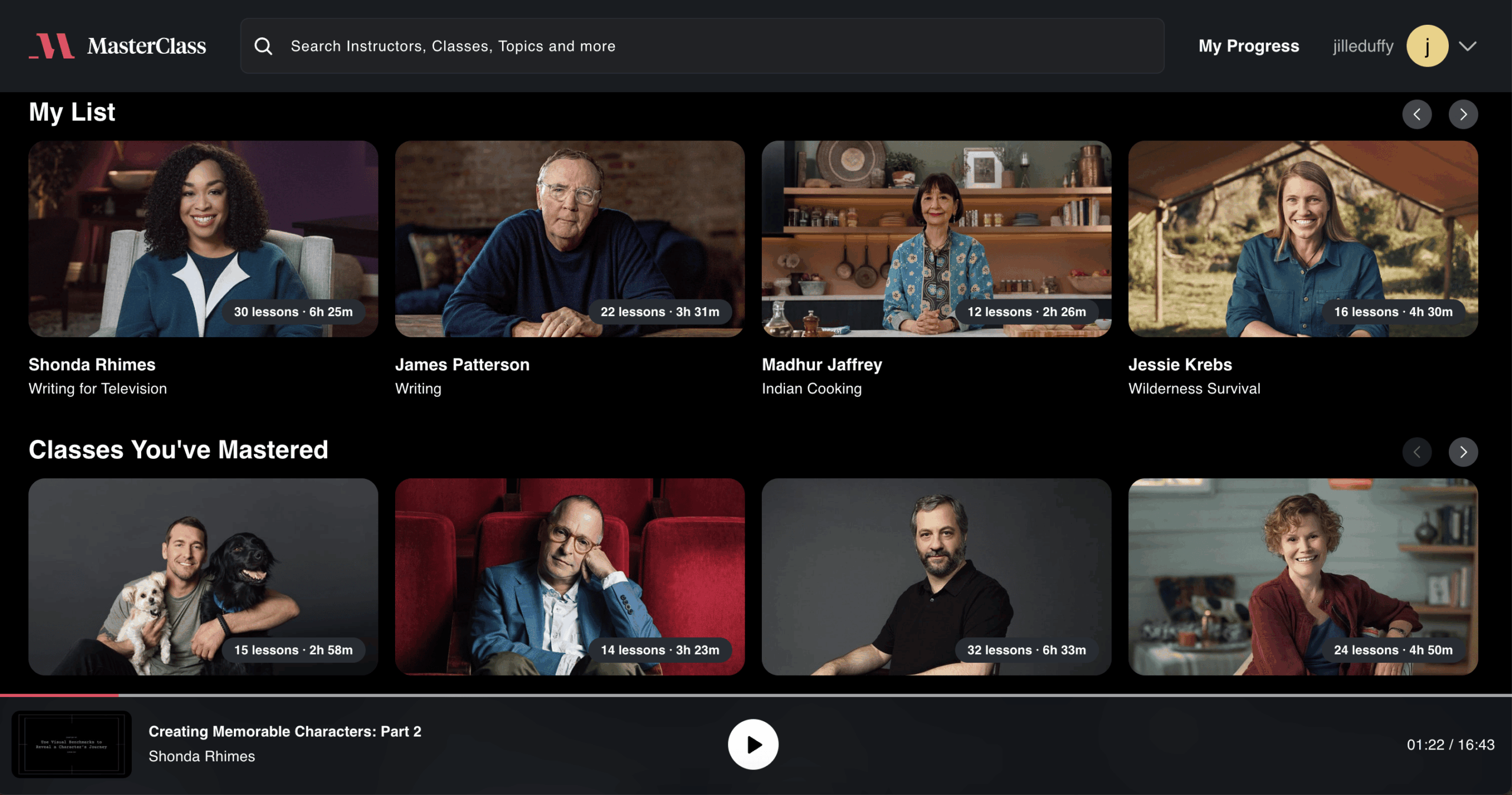
The rules were simple but strict: For the next 30 days, I was not allowed to open Netflix, Hulu, HBO, or YouTube for entertainment. If I wanted to turn on a screen after work, I had to log into MasterClass. I committed to watching at least one lesson (roughly 10–15 minutes) every single night.
The hypothesis was straightforward. If “you are what you eat” applies to the body, surely “you are what you watch” applies to the brain. Would swapping “junk food” content for “gourmet” education change my stress levels, my creativity, or my ability to focus?
Here is what happened when I traded Michael Scott for Neil deGrasse Tyson.
‘Week 1: The Withdrawal and the “Vegetable” Effect
The first three days were surprisingly difficult. I realized quickly that my Netflix habit wasn’t about entertainment; it was about decompression. Or rather, it was about numbing. When you finish a stressful day of work, your brain craves the path of least resistance. You want the mental equivalent of a sugar rush.
MasterClass, by contrast, felt like I was forcing myself to eat vegetables.
On Day 1, I clicked on Chris Voss’s “The Art of Negotiation”. I sat on my couch, remote in hand, waiting to be entertained. The production value was there, cinematic lighting, high-definition cameras, a charismatic host, but my brain kept itching for a plotline. I found myself reaching for my phone, trying to dual-screen. I had to physically toss my phone to the other end of the couch to focus.
But then, something shifted around the 10-minute mark. Voss started talking about “tactical empathy.” He wasn’t just lecturing; he was telling war stories from his time as an FBI hostage negotiator. It was gripping, but in a different way. It demanded my attention. I couldn’t just let it wash over me.
By Day 5, I started “snacking” on lighter courses. I watched Gordon Ramsay teach scrambling eggs. It was only 12 minutes long. It was visually stunning, oddly soothing, and unlike a sitcom, it gave me a tangible takeaway.
The Week 1 Result: My brain rebelled against the active listening required. I felt more tired after watching TV than usual, but I also slept better. The “doomscrolling” loop was broken because the content had a natural stopping point. Unlike Netflix, which auto-plays the next episode to keep you hooked, MasterClass lessons end with a feeling of completion.
Week 2: The Cocktail Party Effect
By the second week, the friction of starting a lesson had vanished. In fact, I started looking forward to it. The most immediate change wasn’t deep wisdom; it was that I suddenly became much more interesting to talk to.
Usually, my small talk consisted of, “Did you see that viral video?” or “Can you believe the weather?”
Suddenly, I was dropping genuinely interesting anecdotes into casual conversation. At a coffee catch-up with a friend, I found myself explaining the concept of “breaking the fourth wall” in comedy, which I had picked up from Steve Martin’s class the night before. Later that week, I mentioned a specific photography lighting technique I learned from Annie Leibovitz.
This is what I call the “Cocktail Party Effect.” My input had changed, so my output changed. I wasn’t just regurgitating plot points from a show everyone else had already seen. I was synthesizing new information.
Psychologically, this had a profound effect on my confidence. When you binge-watch TV, you are a passive observer of other people’s lives. When you watch a MasterClass, you are a student of their excellence. Even if I wasn’t going to become a world-class photographer, simply understanding the vocabulary of the craft made me feel smarter and more connected to the world.
Week 3: The Dopamine Shift
The third week was when the “Digital Diet” started to yield real results. I noticed a distinct shift in my dopamine response system.
Modern entertainment is built on cliffhangers. It’s designed to spike your dopamine with suspense and drama. Education, even high-quality edutainment like MasterClass, operates differently. It runs on the dopamine of competence.
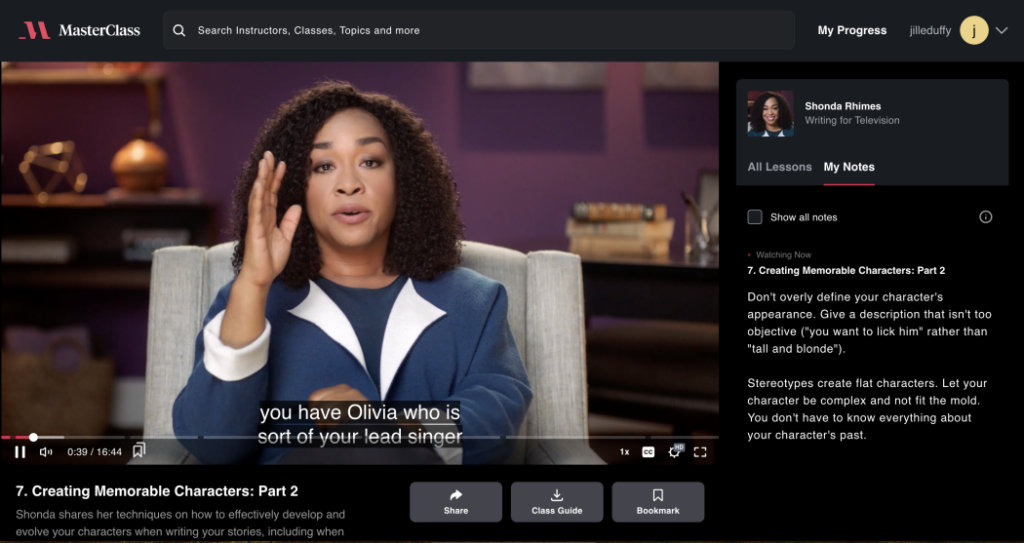
I took James Clear’s class on “Atomic Habits.” Instead of just watching it, I found myself pausing the video to write things down. I wasn’t doing this because I had a test to take; I was doing it because the information was immediately applicable to my life.
I applied a negotiation tactic I learned from Chris Voss to a customer service call regarding my internet bill. It worked. The feeling of success I got from saving $20 a month was infinitely more satisfying than the fleeting amusement of a comedy special.
My brain stopped craving the “sugar high” of drama and started craving the “protein” of utility. I found that my attention span was lengthening. I could sit through a 20-minute video on scientific thinking by Neil deGrasse Tyson without checking my phone once.
This week also highlighted the “Cross-Pollination” of ideas. I was watching Aaron Sorkin teach screenwriting, and he mentioned the importance of “intention and obstacle.” The next day, I applied that exact framework to a marketing presentation I was building for work. The lines between “entertainment time” and “growth time” were blurring. My downtime was actually fueling my career, rather than just distracting me from it.
Week 4: The Verdict and The New Normal
As the 30-day mark approached, I took stock of my mental state.
Did my stress go down? Yes, but not for the reason I expected. It wasn’t that the classes were relaxing (though some, like Ron Finley’s gardening class, were meditative). The stress reduction came from the elimination of guilt. There is a specific kind of low-grade anxiety that comes from wasting three hours on social media or bad TV. It’s the feeling of time slipping away unseized. That feeling vanished. Even if I only watched 15 minutes of a lesson, I went to bed feeling like I had deposited something into my mental bank account.
Did I feel more inspired? Unquestionably. The danger of a 9-to-5 routine is that your world becomes very small. You solve the same problems with the same people every day. MasterClass acted as a window into other worlds. Watching Dr. Jane Goodall talk about conservation or Herbie Hancock talk about jazz didn’t directly help my day job, but it expanded the perimeter of my imagination. It reminded me that the world is vast and full of mastery.
The Return to Netflix On Day 31, the ban was lifted. I opened Netflix. I scrolled through the “Trending Now” list.
Honestly? It looked unappealing. The thumbnails looked loud and shallow. I did eventually watch a movie, but I found myself turning it off halfway through because it wasn’t holding my attention.
The experiment didn’t make me swear off entertainment forever. I still love a good movie. But it broke the default setting. I no longer turn on the TV just to have noise and light in the room.
Conclusion: The Diet That Stuck
We spend so much time curating what we put into our stomachs, counting calories, avoiding sugar, tracking macros, yet we treat our brains like garbage disposals, feeding them whatever algorithmically generated slop is placed in front of us.
My 30 days on MasterClass proved that “Intellectual Nutrition” is real.
When you feed your brain high-quality ingredients, passion, expertise, beauty, and wisdom—it functions better. You feel lighter, sharper, and more optimistic.
I didn’t become a master chef, a hostage negotiator, or a best-selling author in 30 days. But I did become someone who is curious again. I regained the ability to sit still and listen. And most importantly, I remembered that learning isn’t something you leave behind in school; it’s the most entertaining thing you can possibly do with your evening.
If you are feeling stuck, tired, or just bored of the same old plots, try the swap. Your subscription fee buys you more than just videos; it buys you a better brain.