This article contains affiliate links. If you purchase or book through these links, we may earn a commission at no additional cost to you.
The modern traveler is facing a crisis of logistics. Between spiraling baggage fees, the increasing frequency of lost luggage during layovers, and the sheer physical exhaustion of dragging a wheeled monolith over European cobblestones, the allure of “One-Bag Travel” has never been stronger.
The philosophy is simple: pack everything you need for an indefinite period, whether it’s two weeks or two months, into a single carry-on backpack. No check-in counters, no baggage carousels, and total mobility.
However, a quick browse of the popular “One-Bag” forums and subreddits reveals a barrier to entry. The movement has inadvertently gentrified itself. The standard “starter kit” often recommended by influencers includes a $300 aerospace-grade backpack, $100 merino wool t-shirts, and specialized compression systems that cost more than a domestic flight. Suddenly, the pursuit of minimalism looks incredibly expensive.
But does it have to be?
We posed a challenge to the travel status quo: Can you build the ultimate, functional, and stylish One-Bag travel kit for under $100, using only gear from Decathlon?
The answer is a resounding yes. In fact, stripping away the luxury branding might just result in a more rugged, efficient setup. Here is how to hack the system, save your back, and travel like a pro on a shoestring budget.
The Philosophy of the Carry-On
Before we dive into the gear, we must address the mindset. One-bag travel is not about deprivation; it is about elimination of the unnecessary. It operates on the Pareto Principle: 20% of your clothes will be worn 80% of the time.
When you travel with one bag, you are agile. You can hop off a train in Bangkok and jump straight onto a motorbike taxi. You can navigate the steep staircases of the Amalfi Coast without looking like a pack mule. Most importantly, you remove the “stuff” that distracts you from the destination.
The fear, of course, is running out of clean clothes. The solution isn’t packing more; it’s packing smarter fabrics and doing laundry in the sink. This is where the gear selection becomes critical. We aren’t looking for fashion; we are looking for technical performance that disguises itself as casual wear.
The Vessel: The Legendary 20L Backpack
- The Competitor: High-end travel packs ($250+)
- The Decathlon Solution: Quechua NH Arpenaz 100 20L
- The Cost: $20.00 CAD
In the world of budget travel, the Quechua NH100 is a legend. It is the Kalashnikov of backpacks: affordable, ubiquitous, and surprisingly indestructible. While high-end brands charge a premium for “minimalist” aesthetics, Decathlon delivers it for the price of a takeout lunch.
For our challenge, the 20L capacity is the “hard mode” sweet spot. 20 liters forces you to be honest with yourself. It fits under the seat of even the strictest budget airlines, guaranteeing you never pay a carry-on fee at the gate. Whether you’re flying WestJet or a regional European hopper, this bag is your “personal item” loophole.
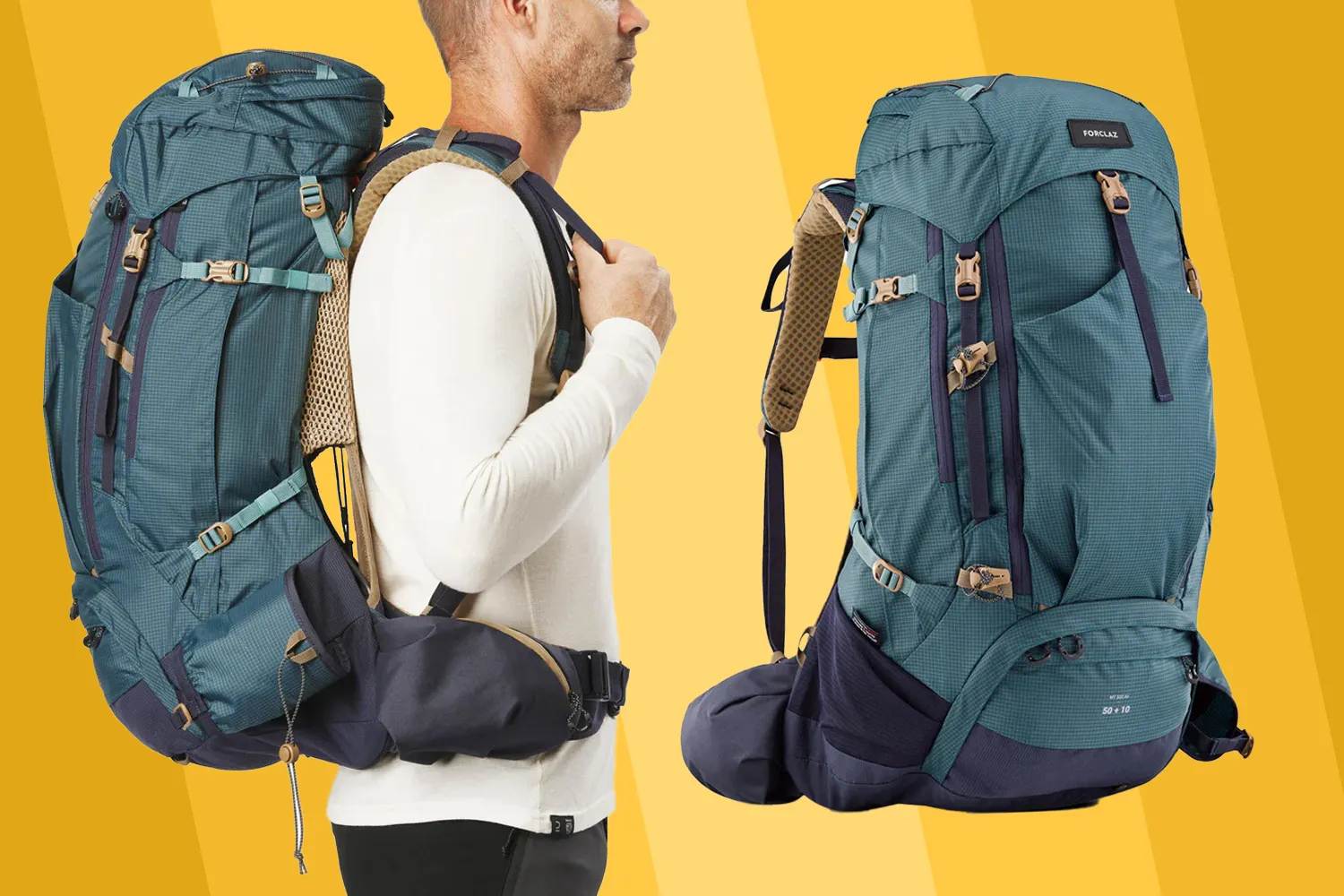
Despite its low price, it features a foam-padded back and straps, thumb loops, and a chest strap to stabilize the load. It lacks the complex suspension systems of a $300 bag, but because you are only carrying 20L of gear, you don’t need a heavy hip belt. The bag itself is featherlight (only 470g), meaning you aren’t wasting your precious weight allowance on the luggage itself.
Pro Tip: Modern versions of the NH100 in Canada now include a separator that can fit a 15-inch laptop. However, for maximum protection, use a separate laptop sleeve to create a dedicated tech compartment. At only 20L, this bag keeps your essentials within reach and your travel footprint small.
The Organization System: Compressing the Chaos
The Competitor: Branded Compression Cubes ($40/set) The Decathlon Solution: Forclaz Travel Packing Cubes The Cost: ~$10 for a set of 3
If the backpack is the shell, packing cubes are the drawers. Novice travelers stuff clothes; expert travelers compress them.
The Forclaz packing cubes are the unsung heroes of the Decathlon travel aisle. They serve two purposes. First, organization: one cube for tops, one for bottoms/underwear, one for electronics. When you arrive at your hostel or hotel, you don’t explode your bag all over the floor searching for socks. You simply slide out the relevant cube.
Second, and more importantly, is compression. By tightly rolling your clothes and zipping them into these cubes, you remove the dead air. This is how you fit two weeks of clothes into a 20L bag. The mesh top allows you to see what is inside without opening it, and the rectangular shape is designed to tetris perfectly into the Quechua backpacks.
The Fabric Revolution: Merino Wool on a Budget
The Competitor: Designer Merino Tees ($80 – $120 each) The Decathlon Solution: Forclaz Travel 500 Merino Wool T-Shirt The Cost: ~$30 – $40
This is the linchpin of the entire operation. In the One-Bag community, Merino wool is treated with almost religious reverence, and for good reason. Unlike cotton, which absorbs sweat and smells bad within hours, or synthetics, which can retain odor even after washing, Merino wool is naturally antimicrobial.
You can wear a high-quality Merino shirt for three or four days in a row, hike in it, sweat in it, and it will still smell neutral. This effectively triples your wardrobe. Two Merino shirts equal six days of cotton shirts.
The problem is the price. A standard Icebreaker or Smartwool shirt can destroy a budget. Enter the Forclaz Travel 500. Decathlon has managed to produce a Merino blend (usually around 70% wool, 30% acrylic for durability) that captures all the magic of wool at a third of the price.
Crucially, the “Travel” line is designed to look like a normal t-shirt, not a shiny gym top. You can wear it on a hike in the morning and to a bar in the evening without looking like you just came off the mountain.
The Hygiene Hack: The Microfiber Towel
The Competitor: Hotel towels or heavy cotton beach towels The Decathlon Solution: Nabaiji Microfiber Towel (Size L) The Cost: ~$6 – $10
If you are staying in hostels, Airbnbs, or camping, a towel is mandatory. But a standard cotton towel is the enemy of the light traveler. It takes up 30% of your backpack space and takes 12 hours to dry, a recipe for moldy smells in your bag.
The Nabaiji Microfiber towel packs down to the size of a fist. It absorbs a tremendous amount of water and, more importantly, dries completely in about an hour. You can shower in the morning, hang it on your bunk, and pack it dry before checkout.
Many travelers hate the “feel” of microfiber (it can feel sticky on wet skin), but the Nabaiji specifically has a textured weave that feels closer to a traditional towel than the smooth, chamois-style alternatives.
The Loadout: A 2-Week Packing List
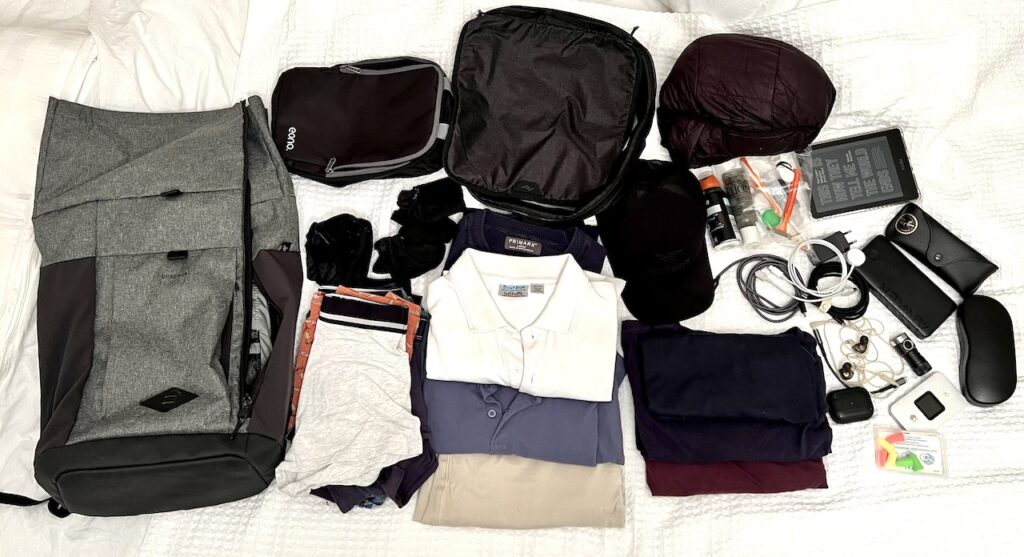
So, what does the final kit look like? Here is the inventory for a 2-week trip to a warm/temperate climate (e.g., Portugal in May or Thailand in November), all fitting in the 20L NH100.
Wearing on the Plane:
- 1 Pair of Pants (Decathlon NH500 Hiking Trousers – look like Chinos, stretch like gym pants)
- 1 Merino Wool T-shirt
- 1 Fleece or Light Jacket (Quechua MH100 Fleece – $10)
- Walking Shoes (Quechua NH100 Hiking Shoes)
Packed in the Bag:
- Cube 1 (Clothing):
- 2 Additional T-shirts (1 Merino, 1 Synthetic for swimming/gym)
- 1 Pair of Shorts (Forclaz Trek 500 – quick dry)
- 4 Pairs of Socks (Quechua hiking socks – durable and dry fast)
- 4 Pairs of Underwear (Synthetic sport material for easy sink washing)
- Cube 2 (The Beach/Sleep):
- Swim trunks
- Lightweight shorts for sleeping
- The Toiletries Pouch:
- Nabaiji Microfiber Towel
- Solid toiletries (Bar soap, solid shampoo to save weight and bypass liquid rules)
- Toothbrush/Paste
- The Tech/Misc:
- Laptop/Tablet in sleeve
- Universal Adapter
- Power bank
- Foldable 10L tote bag (Forclaz) for grocery runs or laundry.
Long Weekend Adventure Packing List
Since August is peak travel season, spontaneous getaway opportunities abound, from quick coastal trips to mountain escapes over a 3- to 4-day weekend. If you’re not out for two whole weeks and just need a fast, frictionless setup for a long weekend, you can pare down your setup even further.
With less gear needed, your bag will sit featherlight on your back, leaving plenty of room for souvenirs or road-trip snacks.
Wearing in Transit:
- 1 Pair of Versatile Bottoms: Forclaz Travel Stretch Shorts or Chino-style pants
- 1 T-Shirt: Forclaz Travel 500 Merino Wool T-Shirt
- Footwear: Comfortable walking shoes or breathable sneakers
Packed in the Bag (Single Packing Cube & Pouch):
- Clothing:
- 1 Extra Merino T-Shirt or Lightweight Synthetic Top
- 1 Evening/Casual Top (Forclaz Lightweight Button-Up)
- 2 Pairs of Underwear & Quick-Dry Socks
- 1 Swimsuit / Boardshorts
- Outerwear / Layering:
- 1 Compact Windbreaker or Rain Jacket (Quechua Raincut – folds into its own pocket)
- Sun & Heat Essentials:
- Compact Sunglasses (Quechua Category 3 UV Protection)
- Travel-sized Sunscreen (50ml or solid stick)
- Packable Sun Hat or Cap
- Hygiene & Tech:
- Nabaiji Microfiber Towel (Size M or L)
- Minimalist Toiletry Kit (Toothbrush, solid 2-in-1 soap bar)
- Compact Power Bank & Phone Cable
The Digital Nomad Angle: Working from the Road with Decathlon Canada
For the modern digital nomad, the Decathlon setup is particularly liberating. The biggest threat to productivity on the road is the logistical hassle of transit. If you are hauling a massive checked bag, you are tethered to hotel check-in times and luggage storage lockers. You can’t simply arrive in Toronto or Montreal at 10 AM, find a quiet cafe, and start your workday because you have to dump your heavy gear first.
With the 20L Decathlon setup, your “luggage” sits unobtrusively under your cafe table. You remain completely mobile. The Quechua NH100 is small enough that you don’t look like a typical “backpacker”; instead, you blend in like a local student or a commuter heading to an office. This “gray man” aesthetic is a built-in safety feature, making you a much smaller target for pickpockets than someone dragging a bright, oversized rucksack through a busy transit hub.
Furthermore, by choosing high-value, affordable Decathlon gear, you free up your travel budget for what actually matters to a nomad: co-working space memberships, high-speed data plans, and better-quality accommodations.
The Verdict: Breaking the $100 Barrier
Let’s tally the receipt for the core upgrade items available at Decathlon Canada that transform a regular traveler into a streamlined “One-Bag” pro:
- Backpack (Quechua NH100 20L): $10.00
- Packing Cubes (Forclaz 3-Piece Set): $18.00
- Merino Wool Shirt (Forclaz Travel 100): $45.00
- Microfiber Towel (Nabaiji Size L): $10.00
- Fleece Layer (Quechua MH100): $15.00
- Foldable Tote (Forclaz 10L): $5.00
- Estimated Total: $103.00 CAD (Prices may vary by province)
For roughly the price of a single checked bag fee on a round-trip international flight, you have acquired a professional travel system from Decathlon that will last for years of exploration.
The “One-Bag” challenge is often framed as a test of sacrifice, but the reality is the opposite. When you are breezing past the crowded baggage claim carousel, walking straight out of the airport, and hopping on a local bus with your entire life securely and comfortably on your back, it doesn’t feel like a sacrifice. It feels like you are cheating the system.
Decathlon has effectively democratized this sense of freedom. You don’t need a trust fund or professional sponsorship to travel light across the globe. You just need a ten-dollar backpack and the courage to leave the “just in case” items at home.