This article contains affiliate links. If you purchase or book through these links, we may earn a commission at no additional cost to you.
In the cutthroat digital economy of 2026, “playing fair” in SEO is a recipe for stagnation. If you are an affiliate marketer, a startup founder, or a growth hacker, you don’t have three years to wait for “organic momentum.” You need results, you need revenue, and you need them yesterday.
The most efficient way to grow isn’t to reinvent the wheel, it’s to find the person who already built the wheel, see which parts are made of gold, and build a better version right next to them. This is the Traffic Heist.
We are no longer in the era of “single keyword” dominance. In 2026, search engines have evolved beyond matching strings of text; they now reward topical authority and intent-based clusters. If you want to outrank a titan, you don’t target one keyword they rank for; you dismantle their entire keyword cluster and rebuild it with more precision.
Here is your blueprint for identifying, analyzing, and “stealing” the high-value traffic that currently belongs to your rivals.
The 2026 Shift: Why Single Keywords are Dead
If your current SEO strategy involves a spreadsheet of 500 individual keywords that you’re trying to write individual 800-word articles for, you are losing.
Search algorithms in 2026 prioritize “The Expert”. They want to see that your site doesn’t just mention a topic, but surrounds it. This is known as Topical Authority. To achieve this, you need to think in Keyword Clusters.
A keyword cluster is a group of related search terms that all point toward a single pillar of intent. Instead of fighting for “best wireless headphones,” a growth hacker in 2026 is fighting for the “wireless audio ecosystem” cluster, covering everything from latency issues and battery chemistry to specific brand comparisons.
The goal of this heist is to identify which clusters are acting as “Money Pages” for your competitors, the pages that actually drive conversions and revenue, and then bridge the gap.
Phase 1: Reconnaissance (Using Traffic Analytics)
Before you can steal the treasure, you have to find the vault. Most marketers make the mistake of looking at a competitor’s homepage traffic. The homepage is usually just a brand-awareness sinkhole. You want to find the “Money Pages.”
Identifying the Gold Mines
Open Semrush Traffic Analytics. This tool is your digital periscope. It allows you to peek behind the curtain of any URL to see not just how much traffic they get, but where it goes.
- Enter the Competitor’s URL: Start with your biggest direct rival.
- Navigate to the “Top Pages” Tab: This is the most important screen in your arsenal.
- Sort by Traffic Share: You will see a list of pages ranked by the percentage of total site traffic they attract.
- Look for the “Money Page” Indicators: You aren’t looking for their “About Us” page. You are looking for URLs that contain terms like
/reviews/,/best-of/,/vs/, or specific product landing pages.
In 2026, the Traffic Analytics tool also provides “Intent Insights.” It will flag whether the traffic arriving at these pages is Informational (just looking), Navigational (trying to find a specific brand), or Transactional (ready to buy). You want to target the pages where the traffic is Transactional but the content is aging.
Phase 2: Reverse-Engineering the Cluster (Keyword Magic Tool)
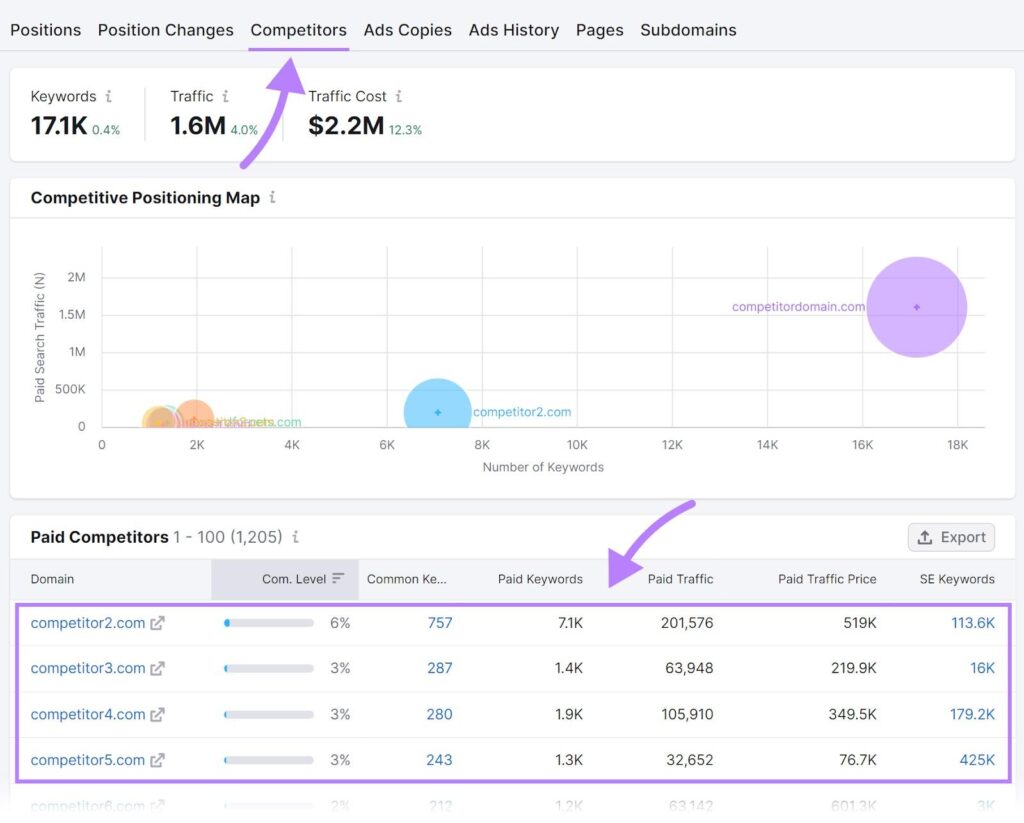
Once you’ve identified a competitor’s top-performing “Money Page,” it’s time to see the “skeleton” of that page’s success. It isn’t ranking for one keyword; it’s likely ranking for a cluster of 50 to 100 related terms.
Dismantling the Cluster
Take that specific URL and plug it into the Organic Research tool. This will show you every single keyword that the page currently ranks for. But we aren’t going to just copy that list. We’re going to use the Keyword Magic Tool to expand it.
- Identify the “Seed” Keyword: Find the primary keyword that is driving the most volume to their page.
- Plug it into Keyword Magic: Set the match type to “Related.”
- Use the 2026 “Clustering” Feature: Semrush now automatically groups keywords into clusters based on semantic meaning.
By looking at these clusters, you will see the gaps. Perhaps your competitor is ranking for “best enterprise CRM,” but they have completely ignored the “CRM for remote-first startups” sub-cluster. This is your entry point. You don’t attack them where they are strongest; you attack where their cluster is thin.
Phase 3: The Gap Analysis (High Demand, Low Competition)
The “Heist” isn’t about brute force; it’s about efficiency. Why fight for a keyword with a Difficulty (KD%) of 90 when there’s a related cluster with a KD of 40 that brings in the same high-intent traffic?
Finding the Frictionless Path
In the Keyword Magic Tool, apply these filters to your competitor’s clusters:
- Volume: > 500 (Minimum viable demand)
- Keyword Difficulty (KD): < 45 (The “Sweet Spot” for growth hackers)
- Intent: Transactional or Commercial
This filter reveals the “low-hanging fruit.” These are the topics your competitor is ranking for by accident, not by design. Because they haven’t optimized their content specifically for these high-intent sub-clusters, a dedicated, well-structured pillar page from your site can “heist” that traffic in a matter of weeks.
Phase 4: Building the “Superior” Pillar
Now that you have the keywords and the gaps, you must build a page that makes the competitor’s page look like a draft. In 2026, this means satisfying Google’s E-E-A-T (Experience, Expertise, Authoritativeness, and Trustworthiness) better than they do.
The 2026 Content Checklist
- Direct Answers: Use a “TL;DR” at the top. 2026 searchers want the answer before they even scroll.
- Interactive Elements: Use calculators, comparison tables, or interactive “Decision Trees.” Semrush’s “Site Audit” tool often flags pages with higher dwell time as authority leaders.
- Semantic Depth: Don’t just repeat the keyword. Use the LSI (Latent Semantic Indexing) terms you found in the Keyword Magic Tool to prove to the AI that you understand the entire topic.
The Competitive Edge: Why Historical Data Matters
The biggest mistake a growth hacker can make is looking at a “snapshot” of today. Trends in 2026 move fast. To truly understand a competitor’s strategy, you need to see their Historical Data.
- Did they lose traffic last May? Why?
- Did they try to enter a new cluster and fail?
- Which pages have they been “boosting” with backlinks over the last 24 months?
This data is only available if you have consistent, long-term access to the platform.
Lock in Your 2026 Advantage
SEO is a marathon, but the Heist happens in sprints. To maintain this level of competitive intelligence, you need the full power of Semrush’s database. Currently, you can lock in a 17% Annual Discount on all plans.
For a startup or an affiliate, this isn’t just a “saving”, it’s an investment in the “Historical Data” vault. It allows you to see the long-term patterns of your rivals so you can predict their next move before they even make it.
“Want to see exactly where your biggest rival gets their traffic? Enter their URL into Semrush right now to expose their top-performing pages.”
Stop Guessing, Start Gaining
The difference between a struggling blogger and a successful digital empire builder in 2026 is the source of their data. One guesses what people want to read; the other knows exactly what people are already buying and simply offers a better experience.
By using Traffic Analytics to find the vault and the Keyword Magic Tool to pick the lock, you can bypass years of “content grinding”. Find the money pages. Build the better cluster. Reclaim the traffic that should have been yours all along.