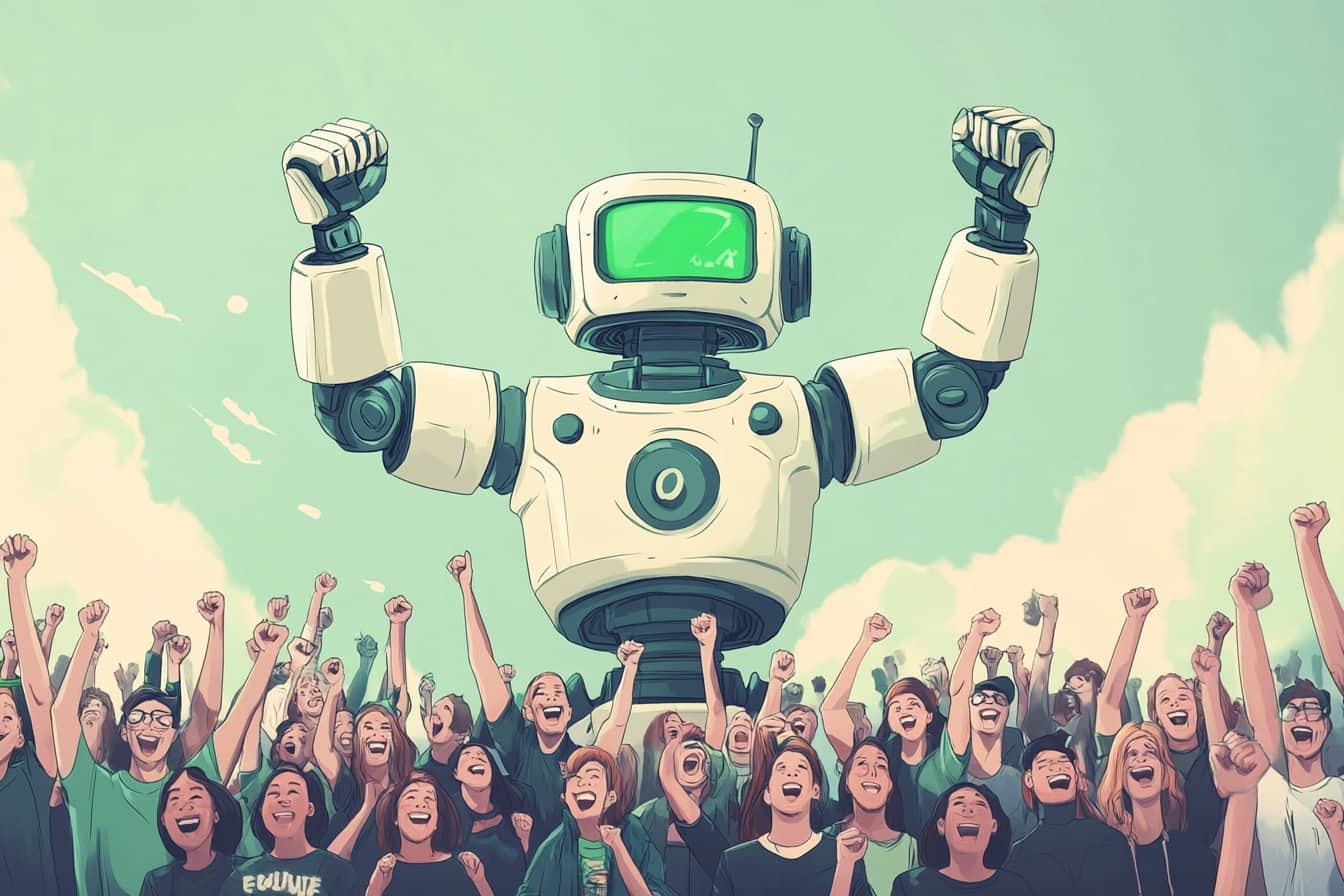
The creative industry is currently standing on the shoreline, watching a tidal wave approach. For some, this wave—Generative Artificial Intelligence—promises a thrilling ride to new heights of productivity and creativity. For others, it threatens to wash away livelihoods, copyright protections, and the intrinsic value of human artistry. In the center of this turbulent ocean stands iStock, a subsidiary of Getty Images and a titan in the stock photography world.
While other platforms initially scrambled to either ban or blindly accept AI-generated content, iStock took a calculated, albeit slower, approach. With the launch of “Generative AI by iStock,” powered by NVIDIA Picasso, the company has staked its claim on a model of “commercially safe” AI. But what does this mean for the people who built the ship—the photographers, illustrators, and designers who populate its library? Navigating this new policy requires a deep dive into the mechanics of their ecosystem, the shift in revenue models, and the redefining of “stock” itself.
The Anatomy of the Policy: Safety First
To understand the impact on contributors, we must first dissect the policy itself. Unlike open models that scraped the internet indiscriminately—vacuuming up copyrighted works, personal photos, and artistic styles without consent—iStock’s generative tool is trained exclusively on Getty Images’ creative library.
This distinction is the cornerstone of their strategy. It addresses the two biggest fears of the corporate client: legal liability and copyright infringement. By training only on licensed content, iStock can offer indemnification—a legal guarantee (typically up to $10,000 per asset, with higher tiers for enterprise) that protects users if they are sued for using the generated content.
For the designer working at an ad agency, this is a game-changer. It transforms AI from a risky experiment into a viable commercial tool. But for the contributor, the implications are far more complex.
The Contributor’s Dilemma: Royalties vs. Training Data
For decades, the stock photography business model was straightforward: a photographer uploaded an image, a user downloaded it, and the photographer got a cut. It was a direct transaction based on specific utility. iStock’s AI policy disrupts this linear flow.
1. The Revenue Shift Under the new model, contributors are compensated not just when their specific image is downloaded, but when their content is used to train the AI. iStock has implemented a contributor royalty ensuring a share of revenues generated by the AI tool is distributed to those whose work helped train the model.
On paper, this sounds equitable. It solves the “theft” argument plaguing platforms like Midjourney. However, it fundamentally changes the value proposition of a photograph. An image is no longer just a visual asset; it is a data point. The concern for many high-level photographers is the dilution of value. Can a fraction of a cent per training cycle replace the $50 or $100 royalty of a specialized commercial license? The jury is still out, and many contributors fear that while this “passive” income is steady, it pales in comparison to the active income of the past.
2. The “Clean” Ecosystem There is, however, a silver lining. By closing their dataset, iStock effectively creates a walled garden. Your work isn’t being used to train a public model that anyone can use for free. It is training a proprietary tool that sits behind a paywall. This theoretically protects the contributor’s style from being commoditized by the open market, keeping it within an ecosystem where money is actually changing hands.
The Designer’s Perspective: A New Toolkit
For the designer—the primary customer of iStock—this policy represents a massive leap in workflow efficiency. The “Navigating the AI Wave” metaphor is apt here because designers are the ones surfing.
1. The End of “Almost Perfect” Every designer knows the struggle of finding a stock photo that is almost right. The lighting is perfect, but the model is looking the wrong way. The background is great, but there’s a distracting tree. iStock’s integration of AI allows for “Generative Expand” and “Inpainting,” meaning designers can now modify stock assets with the same legal safety as the original download.
2. Commercial Confidence The legal indemnification cannot be overstated. In 2024 and 2025, we saw major brands hesitate to use AI because of the legal gray areas. By wrapping their AI generation in the same legal protections as their traditional stock, iStock has given designers the green light. This likely means that designers will remain loyal to the iStock ecosystem rather than defecting to cheaper, riskier AI generators. For the contributor, this is good news—it keeps the buyers in the store.
The Displacement Fear: When the User Becomes the Creator
The elephant in the room is displacement. If a designer can generate a “diverse business team shaking hands in a modern office” using iStock’s AI, do they need to license the photograph of the same scene?
This is where the wave threatens to crash on the contributor. The “bread and butter” stock photography—generic symbols, common business scenarios, simple textures—is most at risk. The AI is exceptionally good at these. Contributors who built portfolios on generic commercial imagery may find their download counts dropping as users opt to generate bespoke versions of those same concepts.
However, the policy may inadvertently push a renaissance in authentic photography. AI still struggles with genuine human emotion, complex journalistic storytelling, and specific, un-staged events. The “premium” collection on iStock may become more valuable as it becomes the only place to get real reality. Contributors may need to pivot from “perfect” setups (which AI mimics well) to “imperfect” authenticity (which AI finds difficult).
Comparative Context: The Stock Wars
To see where iStock stands, we must look at the horizon.
- Shutterstock partnered with OpenAI early on, integrating DALL-E. They also established a contributor fund.
- Adobe Stock allows contributors to upload AI-generated content (with labeling) and pays royalties on it, while also training their own Firefly model.
iStock’s approach is arguably the most “conservative” but also the most “pro-copyright.” By refusing to accept unvetted AI content from contributors (unlike Adobe, where the marketplace is flooded with user-generated AI), iStock maintains a curation standard. This protects the buyer from low-quality hallucinations and protects the human contributor from competing with a flood of synthetic spam in the search results.
The Future: Sink or Swim?
As we look toward 2026 and beyond, iStock’s policy suggests a future where AI and human creativity are not enemies, but uneasy partners.
For the Contributor, the path forward involves adaptation. The days of shooting generic “stock” are numbering. The value has shifted to:
- Data Quality: Shooting high-resolution, perfectly tagged images that serve as premium training data.
- Hyper-Authenticity: Capturing moments that are too messy, too human, or too specific for an AI to dream up.
- Hybrid Art: Using the AI tools themselves to enhance their own work before upload (where permitted).
For the Designer, the future is bright. The friction of stock photography—the hours of searching, the licensing complexities, the compromise on visual elements—is disappearing.
Conclusion
Navigating the AI wave is not about building a wall to stop the water; it is about learning to sail. iStock’s AI policy is a vessel designed for this specific ocean. It is heavy on safety, powered by licensed fuel, and steered by corporate interests.
For contributors, the ride will be bumpy. The passive income from training data is a safety net, but it is not a retirement plan. The real survival strategy lies in elevating the human craft above the algorithmic baseline. For designers, the policy is a ticket to a faster, safer, and more creative workflow.
Ultimately, iStock has decided that the future of stock isn’t just about finding images, but forging them. Whether this new model sustains the livelihood of the artists who unknowingly trained it remains the industry’s most critical question. But one thing is certain: the wave is here, and we are all wet.