This article contains affiliate links. If you purchase or book through these links, we may earn a commission at no additional cost to you.
There is a distinct, almost electric thrill that comes with booking a solo trip. It is a profound declaration of independence, a promise to yourself that you are capable of navigating the world on your own terms. As women, solo travel is not just about seeing new places; it is about reclaiming our space in the world, building unshakeable confidence, and writing our own narratives without relying on anyone else to hold the map.
But let’s be entirely candid: the reality of solo travel isn’t always sunset strolls along the Seine or serendipitous encounters in a Kyoto cafe. Woven into the adventure are moments of deep vulnerability. And if you ask any seasoned solo female traveler to pinpoint the single most stressful, anxiety-inducing phase of an international journey, the answer is almost universally the same: the airport arrival.
Specifically, it is that chaotic, disconnected window of time between the moment the plane’s wheels touch the foreign tarmac and the moment you finally secure a reliable internet connection. This is the “Disconnected Zone,” and it is the most vulnerable part of any solo adventure.
Fortunately, the landscape of travel technology has fundamentally shifted. The days of treating connectivity as a luxury are over. Today, instant data is a non-negotiable safety tool, and digital solutions like the Airalo eSIM have emerged not just as conveniences, but as the ultimate travel wingwoman.
The Touchdown Paradox: From Excitement to Vulnerability
Imagine the scenario: You’ve just endured a fourteen-hour flight. You are jet-lagged, dehydrated, and carrying everything you need to survive for the next two weeks on your back or in a rolling suitcase. You step off the plane into a bustling, unfamiliar arrivals terminal. The signs are in a language you don’t speak.
Your smartphone, usually a glowing beacon of answers, directions, and reassurance, is now just a heavy piece of glass and metal. It proudly displays the dreaded “No Service” across the top corner.
This is the Touchdown Paradox. You have just achieved the ultimate freedom of arriving in a new country, yet you are completely tethered by your lack of connection.
In this state, you are entirely reliant on the kindness of strangers or the unpredictable stability of public airport Wi-Fi, which, if we are honest, is often painfully slow, restricted by time limits, or requires a local phone number just to log in. You cannot pull up your hotel reservation. You cannot double-check the exchange rate. Most importantly, you cannot text your family or friends to let them know you have landed safely.
The Scramble: Navigating the Airport Unprotected
Without an immediate data connection, your next mission is forced upon you: you must find a local physical SIM card.
This sends you out into the arrivals hall, a space notoriously designed to overwhelm. You are now a tired tourist lugging baggage, scanning desperately for a telecom kiosk. When you look lost, you become a target. Unofficial taxi drivers will approach you, offering rides that cost triple the standard fare. Scammers thrive in arrivals halls, preying on the disorientation of newly landed travelers.
When you finally locate a SIM kiosk, you are often at the mercy of exorbitant “airport prices.” You hand over your unlocked phone to a stranger behind a counter, wait for them to pop out your primary SIM card (which you now have to carefully tape to a piece of paper and pray you don’t lose), and insert the new one.
This entire process can take an hour or more. It is an hour where your situational awareness is compromised because you are focused on logistics rather than your surroundings. For a woman traveling alone, this hour of distraction and disconnection is a genuine safety liability.
The Safety Imperative of Instant Connectivity
Now, let’s rewrite that scenario.
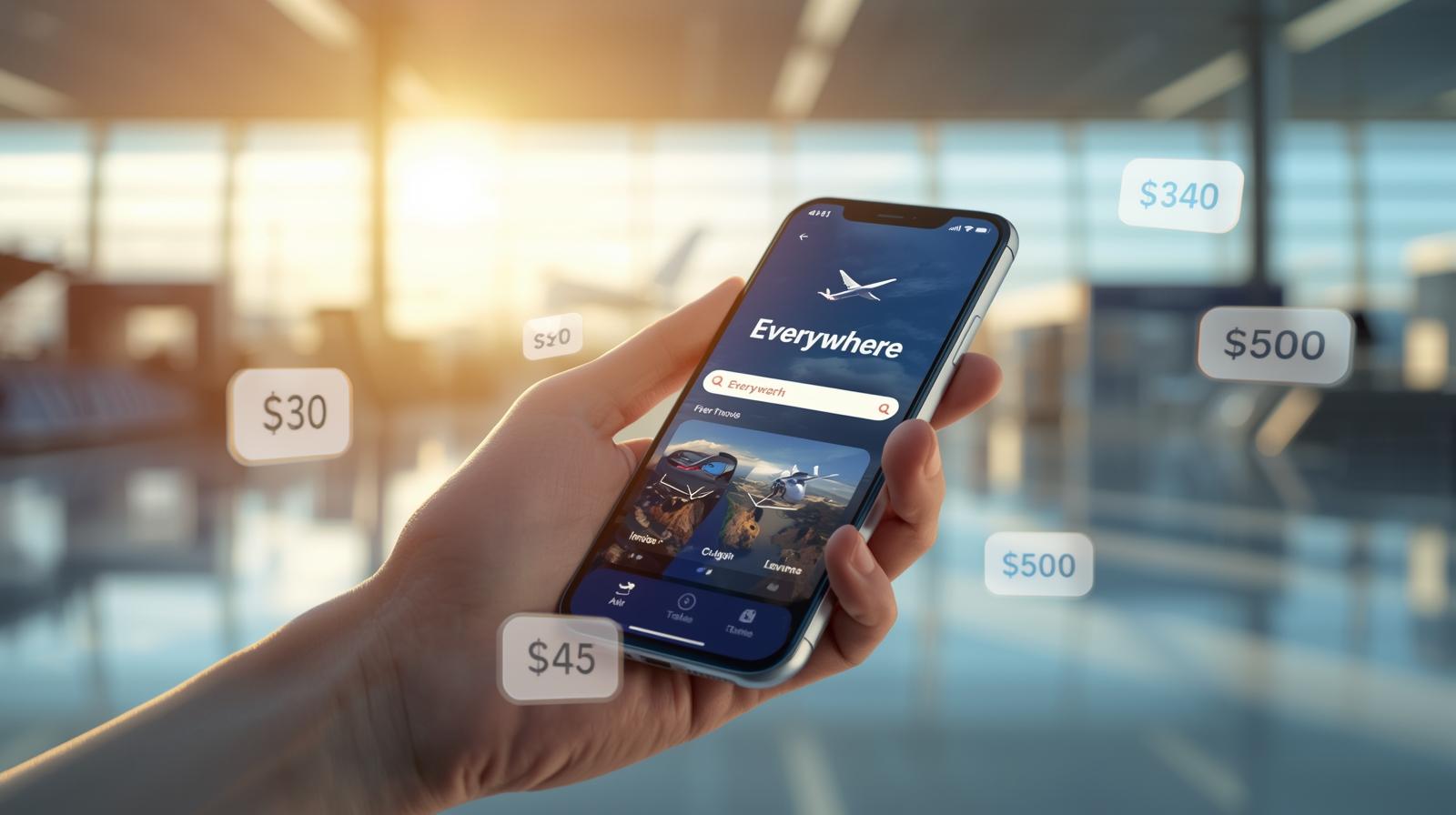
Imagine your plane lands. As you taxi to the gate, you take your phone off airplane mode. Within seconds, your device connects to the local 5G network. Your notifications populate.
Before you have even unbuckled your seatbelt, you have sent a WhatsApp message to your mother or best friend: “Landed safe. Getting my bags now.” By the time you reach the baggage carousel, you have already opened your rideshare app, compared the price of an Uber to the local airport express train, and mapped the exact distance to your Airbnb. You know exactly where you are going, how much it should cost, and how long it will take.
When you walk through the sliding doors into the chaotic arrivals hall, you don’t look lost. You look purposeful. You walk straight past the aggressive taxi touts because your verified driver is waiting for you at Door 4. You get into the car, and you share your live GPS location with your friend back home so they can track your journey to the hotel in real-time.
This is not just convenience. This is power. This is the safety imperative of instant connectivity. Having data the second you land shifts your posture from vulnerable and reactive to secure and proactive.
Enter the Digital Wingwoman: How Airalo Changes the Game
This seamless arrival experience is the exact problem that eSIMs (embedded SIMs) were designed to solve, and Airalo has pioneered making this technology accessible to the everyday traveler.
An eSIM is exactly what it sounds like: a digital SIM card that is already built into the hardware of almost all modern smartphones. Instead of buying a physical piece of plastic, you simply download a digital data plan.
Airalo functions like a global marketplace for these digital data packs. From the comfort of your living room couch, weeks before your trip, you can open the Airalo app, select your destination (they cover over 200 countries and regions), and purchase a data package tailored to your needs, whether that’s 3GB for a weekend in Paris or a regional plan covering a month-long backpacking trip across Southeast Asia.
You install the eSIM before you leave your home country. It sits quietly on your phone, dormant. The moment your plane lands and you arrive in your destination country, you simply go into your phone settings, toggle the eSIM “On,” and your phone automatically connects to the local cell towers.
There is no kiosk. There is no language barrier. There is no tiny SIM ejector tool to lose. There is only immediate, reliable connection. It is the digital equivalent of having a trusted friend waiting for you at the airport, ready to guide you to your hotel.
Preserving Your Digital Identity: The Hidden Safety of 2FA
Beyond the physical safety of navigating an airport, Airalo provides a critical layer of cybersecurity that is often overlooked by travelers: the protection of your Two-Factor Authentication (2FA).
When you remove your primary physical SIM card to use a local foreign SIM, your phone number goes dark. You can no longer receive SMS text messages sent to your home number.
Imagine you are standing at a train station in Rome, and your credit card is suddenly flagged for suspicious activity and blocked by your bank. To unblock it, the bank needs to send a verification code via SMS to your registered phone number. If your home SIM card is sitting in your wallet, you cannot receive that code. You are locked out of your funds in a foreign country.
Because Airalo utilizes the eSIM technology, it allows for Dual SIM functionality. This means you can keep your primary, home-country SIM card active inside your phone to receive essential iMessages, emergency calls, and crucial banking SMS codes, while simultaneously routing all your heavy internet data usage (maps, browsing, social media) through the affordable Airalo eSIM. You maintain your digital identity and your access to emergency funds without paying exorbitant data roaming charges to your home carrier.
Beyond the Airport: Your Constant Guardian
The safety benefits of arriving connected extend far beyond the airport terminal. Solo travel requires you to be your own navigator, translator, and problem-solver. A reliable data connection is the multi-tool that makes all of this possible.
- Navigating After Dark: If a museum visit runs late and you find yourself in an unfamiliar neighborhood after sunset, you do not want to be standing on a street corner staring at a paper map or asking strangers for directions. Instant data allows you to pull up Google Maps, chart the safest, most well-lit walking route, or immediately summon a verified rideshare to get you back to your accommodation safely.
- The Language Barrier: Miscommunications can escalate quickly. Having instant access to Google Translate, including its real-time conversation and camera translation features, ensures you can read menus, understand transit announcements, and communicate clearly with locals, pharmacists, or authorities if an emergency arises.
- Emergency Information: In the rare event of a crisis, whether it’s a minor medical issue, a lost passport, or simply needing the address of your country’s embassy, having immediate access to a search engine can be life-saving. You aren’t reliant on finding a coffee shop with an open Wi-Fi network.
The Economics of Empowerment
Historically, the only way to get this level of instant, seamless connectivity was to pay punishing international roaming fees charged by domestic carriers, often upwards of $10 to $15 a day. For a budget-conscious solo traveler, that is simply not sustainable.
Airalo democratizes this safety feature. Local and regional eSIM plans are shockingly affordable, often costing just a few dollars for a gigabyte of data. It eliminates the “tourist tax” you pay at airport kiosks and protects you from the predatory pricing of traditional roaming. You pay for exactly what you need, with total transparency.
Conclusion: Pack Your Peace of Mind
Preparing for a solo trip is an exercise in risk mitigation. We buy travel insurance, we share our itineraries with our families, we pack first-aid kits, and we read up on local customs. Yet, for too long, we have accepted the dangerous vulnerability of arriving in a new country disconnected.
We shouldn’t have to. Solo travel is meant to be an exercise in joy, discovery, and self-reliance. It shouldn’t begin with panic in an arrivals terminal.
By treating data not as a luxury, but as a fundamental pillar of your travel safety strategy, you change the entire tone of your journey. An Airalo eSIM is more than just a gigabyte allowance; it is peace of mind downloaded directly to your device. It ensures that from the moment you land to the moment you depart, you have the world at your fingertips, the ability to call for help, and the power to navigate any environment with absolute confidence.
Before you pack your passport, before you lock your front door, make sure you’ve downloaded your travel wingwoman. The world is waiting, and you are ready to meet it, safely, securely, and fully connected.