
This article contains affiliate links. If you purchase or book through these links, we may earn a commission at no additional cost to you.
“The old narrative that older adults don’t like technology is officially dead. In 2026, the 50+ generation isn’t just adopting tech, they are driving its evolution.”
For decades, the tech industry fell into a lazy trap when designing devices for older adults. The products were either overly simplified, clad in clinical beige, or worse, treated as digital training wheels. But if you walked the floor at the Consumer Electronics Show (CES) in early 2026, you witnessed a massive cultural and technological shift.
The “AgeTech” showcase at CES 2026 wasn’t a niche corner of the convention; it was the main event.
According to AARP’s landmark 2026 Tech Trends report, adults aged 50 and older are leading a quiet revolution in smart home automation, generative artificial intelligence (AI), and personal health monitoring. The motivation isn’t a desire to chase fleeting Silicon Valley trends. Instead, it is deeply practical: older adults are using smart tech to protect their independence, secure their homes, and age in place on their own terms.
If you are looking to upgrade your home ecosystem, monitor your health passively, or keep your mind firing on all cylinders, the digital landscape of 2026 has been built with you in mind. Here is a comprehensive look at how AI and smart devices are redefining what it means to age dynamically, and how you can use your AARP membership to fund your digital upgrade.
The 2026 AI Boom: Passive Health Monitoring at Home
The biggest headline of the year is the sheer velocity of AI adoption. AI usage among adults over the age of 50 has nearly doubled this year alone. However, while younger generations are using AI primarily to generate images or write emails, the 50+ demographic is using it to build a invisible, proactive safety net inside their homes.
We have officially moved past the era of reactive emergency buttons, the wearable pendants that require you to press them after a mishap occurs. In 2026, AI-driven wellness tools focus on prediction and prevention.
- Ambient Health Sensors: New smart home devices use radar and radio-frequency waves to track movement, respiration rates, and sleep patterns throughout a house without a single camera being installed. AI algorithms learn your daily baseline habits. If the system detects a subtle change in your walking gait, or notices you’re spending twice as long in the bathroom, it flags it as a potential health risk before a fall ever happens.
- Smart Wearables with Medical-Grade Accuracy: The smartwatches of 2026 do far more than count your steps. They actively monitor blood oxygen, detect irregular heart rhythms, and can even gauge changes in blood pressure using advanced optical sensors.
These innovations allow family caregivers to breathe easier and give older adults the ultimate luxury: the ability to live safely, privately, and independently in their own homes for years longer than previously possible.
Tool Spotlight: Navigating Brain Health with AARP’s New “Staying Sharp®” Tool
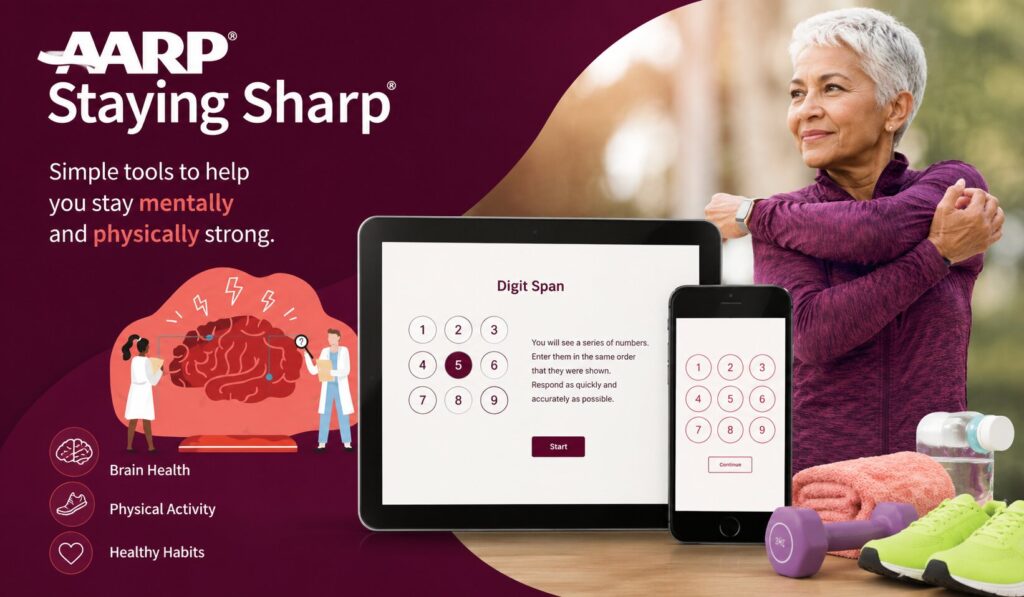
Physical health is only one piece of the puzzle. Mental acuity and cognitive longevity are top priorities for anyone navigating their 50s, 60s, and beyond. This is why AARP officially launched its highly anticipated Staying Sharp® Brain Health Tool.
Rather than offering generic brain games that quickly become repetitive, this newly evolved digital tool integrates directly with your modern lifestyle. It treats cognitive wellness as a daily, accessible habit.
Using seamless wearable integrations, the Staying Sharp® platform syncs directly with your favorite smartwatch or fitness tracker. It analyzes your daily sleep data, physical activity levels, and stress management, and then translates those metrics into actionable, bite-sized daily steps.
The philosophy behind it is simple: what is good for your heart is good for your brain. By encouraging small, scientifically backed lifestyle adjustments, such as a brisk ten-minute walk after lunch or a targeted mindfulness exercise before bed, the tool helps you systematically build a shield against cognitive decline. It is an intuitive, modern approach to brain health designed specifically for an increasingly connected generation.
Everyday Connectivity: Managing the Multi-Screen Household
If you think your household is lagging behind the tech curve, look around your living room and count your devices. The data from AARP’s 2026 report reveals a startling reality: the average adult over the age of 50 now owns seven digital screens.
Between smartphones, tablets, laptops, smart TVs, streaming sticks, connected e-readers, and smart home hubs (like an Amazon Echo Show or Google Nest Hub), the modern 50+ household is a highly integrated digital command center. We use these screens to manage everything from grocery deliveries and prescription refills to virtual doctor visits via telehealth.
But as our digital footprints expand, two distinct challenges arise: managing the rising cost of staying connected, and protecting our personal data from increasingly sophisticated online threats. Fortunately, this is where your AARP membership pivots from a community network into a powerful financial asset.
How to Upgrade Your Tech and Protect Your Wallet
Embracing the smart tech revolution shouldn’t mean blowing through your retirement savings. If you know where to look, your AARP membership unlocks exclusive pricing on everything from cellular networks to educational resources.
1. Slash Your Monthly Connectivity Costs
To feed seven screens with data, you need a robust, reliable cellular network. But you shouldn’t be paying premium corporate prices for unlimited data.
Upgrading your tech doesn’t have to break the bank. AARP members can currently get two lines of unlimited talk, text, and data for just $55 per month with Consumer Cellular. Unlock this Consumer Cellular offer!
This allows you to keep your smartphone, tablet, and connected smartwatches online without worrying about data caps or hidden fees.
2. Master AI and Privacy Without the Confusion
If terms like “Artificial Intelligence,” “biometric tracking,” and “smart home ecosystems” feel overwhelming, you are not alone. The speed of tech innovation can make anyone feel left behind, and the rise of digital scams means security is paramount.
Feeling overwhelmed by AI? Explore AARP’s Tech Guides – (members save 40%) to get up to speed on online privacy, identity theft protection, and smartphone mastery through the AARP Personal Technology Resource Center.
These self-paced, jargon-free digital guides ensure that you remain the master of your technology, rather than letting your technology confuse you.
3. Get Rewarded for Staying Active
If you are already wearing a smartwatch or tracking your steps to feed your brain health goals, you should be getting paid for your effort.
Have a smartwatch? Connect it to the AARP Rewards portal today and earn points just for hitting your summer fitness goals.
You can instantly redeem those points for gift cards, high-end tech accessories, or apparel, turning your daily wellness routine into a rewarding financial loop.
The Verdict: The Future of Aging is Bright, Connected, and Autonomous
The year 2026 has proven once and for all that technology is the ultimate equalizer for longevity. By weaving artificial intelligence, ambient smart home devices, and specialized cognitive tools like Staying Sharp® into our daily workflows, we aren’t just extending our lives, we are radically improving the quality of those years.
You don’t need a degree in computer science to participate in this revolution. With affordable cellular infrastructure, tailored educational guides, and real-time rewards at your fingertips, upgrading your life is as simple as clicking a link.
Step into the future of your home. The tools are ready for you.