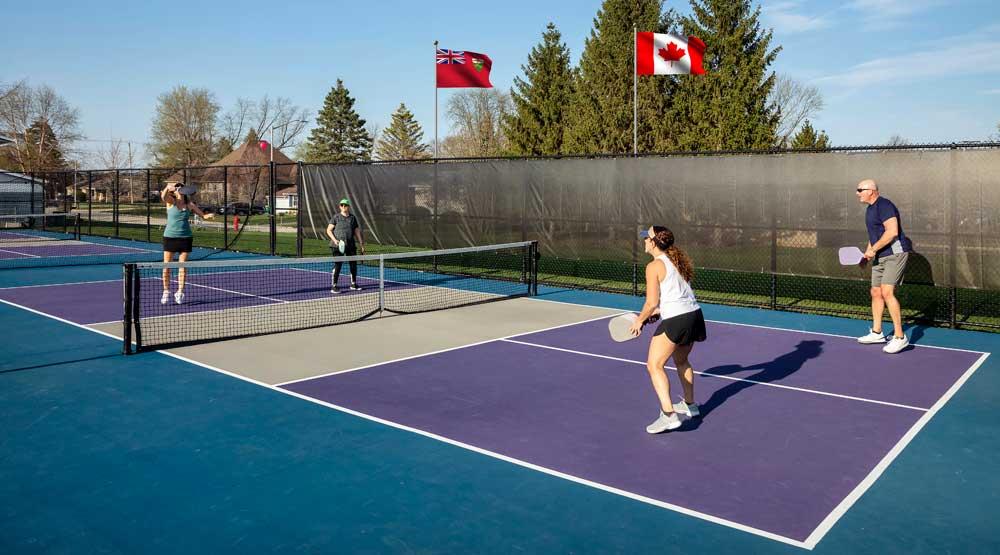
If you have walked past a local community center, tennis court, or school gymnasium anywhere from Halifax to Vancouver over the past year, you have likely heard it: a rhythmic pop-pop-pop sound echoing through the air.
That distinct sound is the footprint of a sports revolution. Pickleball has officially shed its reputation as a quiet pastime for retirees and evolved into a full-blown national obsession. According to the latest data from Pickleball Canada, participation numbers have skyrocketed to approximately 1.8 million active Canadian players, a staggering 340% increase over five years.
Whether you are a Gen Z college student looking for a fun weekend activity, a mid-career professional seeking an easy-access cardio outlet, or a family wanting a sport everyone can play together, pickleball delivers.
Below is an in-depth look at why pickleball has captured the heart of the Great White North, followed by an essential breakdown of the gear you actually need to hit the court, without blowing your budget.
The Great Canadian Surge: Why Is Pickleball Exploding?
What turned a backyard pastime invented in the 1965 Pacific Northwest into Canada’s undisputed fastest-growing sport? The answer lies in a rare combination of accessibility, social connection, and sheer adaptability.
Canadian Pickleball Growth is Being Driven by Three Factors:
| Low Barrier to Entry | Social-First Culture | Year-Round Adaptability |
|---|---|---|
| 10-minute learning curve | Open-play rotation makes it easy to join games | Easily moves indoors during Canadian winters |
| Low-impact on joints | Players of all ages share the court | Played in gyms, recreation centres, and bubble domes |
| Affordable equipment | Strong community atmosphere | Supports year-round participation |
1. A Micro-Learning Curve
Unlike tennis or golf, which can require months of expensive lessons just to sustain a basic rally, pickleball offers near-instant gratification. The court is smaller (roughly one-third the size of a tennis court), the paddles are light, and the plastic wiffle-style ball travels slower. Within 10 minutes of picking up a paddle, a total beginner can serve, rally, and score points.
2. Radical Inclusivity & Demographic Shifts
While initial adoption was driven by active older adults, the fastest-growing player demographic in Canada is now Gen Z and Millennials. Pickleball is inherently intergenerational. It is common to see a 19-year-old and a 65-year-old teamed up in doubles, engaging in a fierce, high-speed “dink battle” at the kitchen line.
3. Built for Canadian Winters
Canadian weather can be notoriously harsh on outdoor sports. However, pickleball’s compact court footprint allows municipal recreation departments, school gyms, and private clubs across Canada to quickly set up indoor courts. When the snow falls, the play simply transitions inside bubble domes, converted tennis warehouses, and community halls.
Gear 101: What Do You Actually Need to Play?
One of pickleball’s biggest selling points is its affordability. You do not need to invest thousands of dollars in high-end equipment to enjoy the game. However, playing with the wrong gear, like wearing flat running shoes on a sticky indoor court or using a bargain wooden paddle, can lead to poor performance and unnecessary injuries.
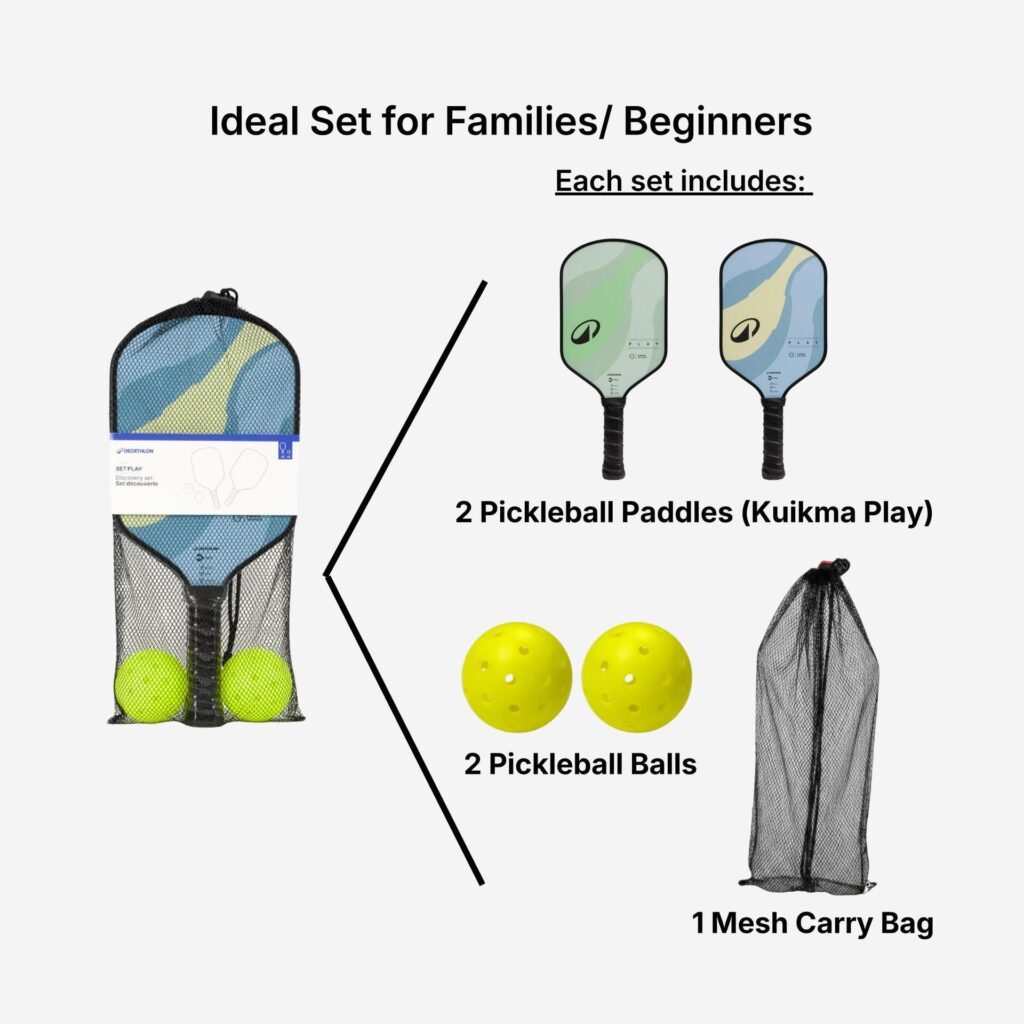
To get court-ready, global sports retailers like Decathlon have become go-to resources for Canadians, offering well-engineered, accessible gear tailored for everyone from absolute novices to competitive tournament players.
Here is the exact breakdown of gear you need to hit the court safely and effectively.
1. The Paddle: Power vs. Control
Your paddle is your primary instrument. Pickleball paddles generally fall into three construction tiers:
PADDLE TIER COMPARISON
| Tier | Material | Performance | Best For |
|---|---|---|---|
| Tier 1 | Wood | Heavy feel, high vibration | Casual or recreational play |
| Tier 2 | Composite / Fiberglass | Great power, forgiving sweet spot | Beginners and improving players |
| Tier 3 | Raw Carbon Fiber | Superior touch, precision spin, excellent control | Intermediate to advanced players |
- Beginner (Wood vs. Composite): Skip the heavy, wooden paddles often sold in basic department store sets. They transfer heavy vibration to your wrist and elbow. Instead, opt for a entry-level composite or fiberglass paddle (such as Decathlon’s Kuikma or Perfly starter lines). These offer a lightweight feel, a forgiving sweet spot, and great “pop” for under $50.
- Intermediate to Advanced (Carbon Fiber): If you are looking to place precise soft shots (dinks) or apply heavy spin, upgrade to a raw carbon fiber face with a honeycomb polymer core. These absorb energy to give you tactile touch at the net while maintaining power from the baseline.
2. The Balls: Outdoor vs. Indoor
Not all pickleballs are created equal. Using the wrong ball for your environment drastically changes how it bounces, flies, and wears out.
| Feature | Indoor Pickleballs | Outdoor Pickleballs |
| Hole Count | 26 larger holes | 40 smaller drilled holes |
| Weight | Slightly lighter, softer plastic | Heavier, harder plastic |
| Flight Dynamics | Slower flight; easier to control | Wind-resistant; faster bounce |
| Durability | Rarely cracks; soft wear over time | Prone to cracking in cold Canadian temperatures |
Pro Tip: If you are playing outdoors on asphalt or concrete during cool Canadian autumns or springs, keep a few extra outdoor balls in your bag. Cold weather hardens the plastic, making outdoor balls more susceptible to cracking on hard hits.
3. Footwear: The Unsung Hero of Injury Prevention
If you make only one dedicated equipment investment, make it your shoes.
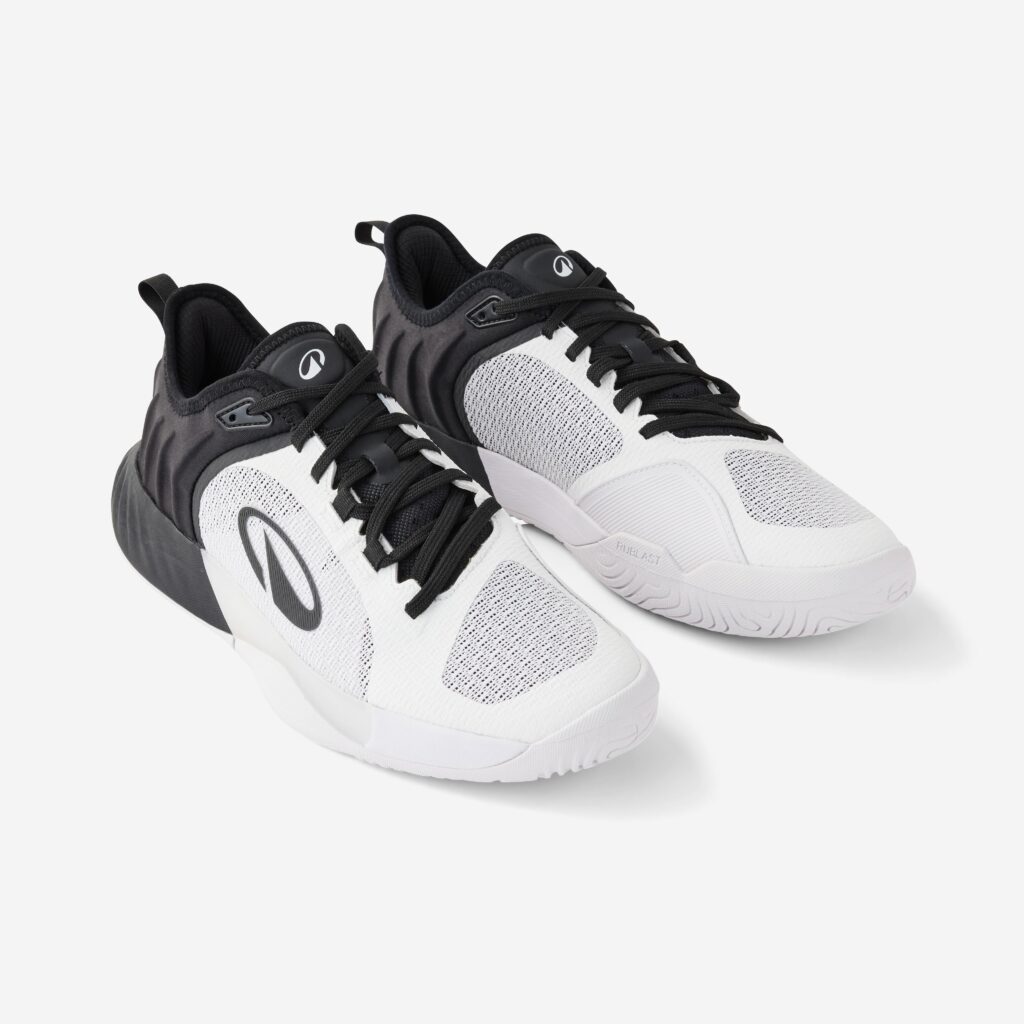
Many beginners make the mistake of wearing forward-running shoes to play pickleball. Running shoes are designed strictly for linear (forward-and-back) movement and feature high, cushioned midsoles. Because pickleball requires constant side-to-side shuffling, quick pivots, and sudden stops at the net, wearing running shoes significantly increases your risk of rolling an ankle.
Look for a dedicated court shoe or indoor racket-sport shoe (designed for tennis, badminton, or squash).
- Outsole: Needs dense rubber lateral bumpers to handle heavy side-to-side wear.
- Midsole: Lower to the ground for enhanced stability during lateral changes of direction.
- Non-Marking Rubber: Required by almost all indoor gym facilities across Canada to protect hardwood flooring.
Decathlon’s racket sports footwear lineup features specialized court shoes that deliver lateral support, sticky rubber traction, and durability at accessible price points.
4. Apparel & Accessories
Pickleball is an active, high-sweat sport. Keep your apparel light, breathable, and functional.
- Moisture-Wicking Apparel: Standard synthetic t-shirts, athletic shorts, or skorts made of polyester-elastane blends keep you cool during intense indoor rallies.
- Protective Eyewear: Highly recommended, especially for doubles play. When four players are standing just 14 feet apart at the kitchen line, a deflected hard smash can travel up to 60 mph. Lightweight polycarbonate protective glasses safeguard your eyes without obscuring your field of vision.
- Overgrips & Sweatbands: Canada’s indoor summer facilities can get humid. Synthetic overgrips wrapped around your paddle handle absorb sweat and maintain traction when points get tense.
How to Get Started Playing in Canada
Ready to join the 1.8 million Canadians on court? Getting involved is straightforward:
- Find Your Local Hub: Download court-finder apps or check the official Pickleball Canada directory to locate public courts, drop-in community centers, or dedicated indoor facilities near you.
- Show Up for “Open Play”: Most facilities offer open rotational play. You simply place your paddle in a queue rack, play a game to 11 points with whoever is next in line, and rotate out. It is the easiest way to meet local players.
- Grab a Starter Bundle: Grab a 2-paddle starter kit (complete with balls and a carry bag) from a local sporting goods retailer like Decathlon, lace up your court shoes, and hit the court.
Frequently Asked Questions (FAQs)
What on earth is “The Kitchen” in pickleball?
“The Kitchen” is the informal name for the Non-Volley Zone (NVZ), a 7-foot section extending from the net on both sides. You are strictly forbidden from hitting the ball out of the air (volleying) while standing inside this zone or stepping on the line. It prevents players from simply standing at the net and smashing every ball downward!
Why is the sport called “Pickleball”? Is there a pickle involved?
No actual pickles are involved! The most widely accepted origin story comes from the sport’s co-founder, Joel Pritchard. His wife, Joan Pritchard, named the game “pickleball” because the mix of different sports rules (tennis, badminton, ping pong) reminded her of a “pickle boat” in rowing, a crew thrown together from the leftovers of other boats.
Can I play pickleball on a standard tennis court?
Yes! A standard tennis court can easily fit four regulation pickleball courts. Many Canadian municipalities draw temporary chalk or tape lines and use portable nets to convert underutilized tennis courts into bustling pickleball hubs.
How long does a typical pickleball game last?
Games are usually played to 11 points (must win by 2), which typically takes between 15 to 25 minutes. Because games are relatively short, open-play formats allow dozens of players to rotate on and off courts smoothly during a two-hour session.