This article contains affiliate links. If you purchase or book through these links, we may earn a commission at no additional cost to you.
For decades, the world of sports has been subtly divided by a velvet rope. On one side, you have the “people’s sports”, running, soccer, basketball, where the price of entry is a pair of shoes or a ball. On the other side lie the “gatekept” disciplines. These are the sports of leisure, of vacations, and, historically, of the wealthy.
Horse riding. Golf. Paddleboarding. Snorkeling.
These activities have traditionally carried a “curiosity tax.” You couldn’t just try equestrianism; you had to invest in bespoke leather boots and club memberships before you even sat in a saddle. You couldn’t just try golf; you needed a $500 set of clubs just to avoid being laughed off the driving range.
This financial barrier has killed millions of potential hobbies before they even began. But Decathlon Canada is dismantling these gates, bolt by bolt. By controlling their entire supply chain, Decathlon hasn’t just made affordable gear; they have engineered out the complexity that makes these sports expensive.
Here are four formerly “elite” sports you can finally afford to enter in 2026 for a fraction of the traditional cost.
1. Horse Riding: The “Sport of Kings” on a Budget
The Brand: Fouganza | The Barrier: Tradition and Leather
Equestrian sports are perhaps the most intimidating of all. The perception is that you need a pony, a stable, and an aristocrat’s surname. Even just taking lessons usually requires a strict dress code: jodhpurs, specific boots, and a safety-certified helmet. Historically, this “starter kit” alone could run upwards of $300.
The Decathlon Solution: Fouganza flipped the script by replacing expensive leather with high-performance synthetics. They realized that a beginner doesn’t need hand-stitched calfskin; they need durability and safety.
- The Gear: You can pick up Fouganza 100 Jodhpurs (approx. $30), Schooling Riding Boots ($27), and a Certified Safety Helmet ($42) for a total cart value of roughly $99.
- The Tech: The boots use injection-molded construction, meaning they are waterproof and seamless, eliminating the labor costs of traditional stitching while offering better mud resistance for Canadian riders.
2. Golf: Breaking the “Country Club” Wall
The Brand: Inesis | The Barrier: Over-Equipment
Golf is notorious for its startup costs. A standard branded set of 14 clubs can easily cost $1,000. Add in the bag, the balls, and the shoes, and you are looking at a massive investment for a sport you might end up hating after three rounds.
The Decathlon Solution: Inesis challenged the fundamental assumption of golf: Do you really need 14 clubs? Data showed that beginners barely use half the clubs in a bag.
- The Gear: Inesis created the 100 Graphite Half Set (6 clubs and a bag), which currently retails for around $195 on sale (regularly $330). It covers every distance a beginner can actually hit and is much lighter to carry.
- The Tech: They use hollow-body designs and enlarged club faces to make them more “forgiving” on mishits, ensuring your first day on the range is satisfying rather than frustrating.
3. Stand Up Paddleboarding (SUP): Access to the Water
The Brand: Itiwit | The Barrier: Logistics and Storage
The cost of paddleboarding wasn’t just the $800 fiberglass board; it was the lifestyle required to own it. You needed a roof rack and a garage for a 10-foot board. If you lived in a Toronto apartment or drove a sedan, you were priced out by physics.
The Decathlon Solution: Itiwit solved the storage problem with High-Pressure Drop Stitch Technology.
- The Gear: An Itiwit 100 Inflatable SUP Set (including the board, paddle, and pump) retails for approximately $300 – $360. For the price of three weekend rentals, you can own your own gear.
- The Innovation: The board deflates into a backpack. You can take it on the TTC, store it in a closet, or throw it in the trunk of a compact car. The “barrier” of needing a truck and a garage is gone.
4. Snorkeling: Ending the “Tube Breathing” Struggle
The Brand: Subea | The Barrier: Discomfort and Fear
Snorkeling is the gateway to the ocean, but traditional gear is flawed. Separate masks and snorkel tubes induce a gag reflex in many, and masks fog up constantly. High-end full-face masks existed but were prohibitively expensive niche items.
The Decathlon Solution: Subea introduced the Easybreath Mask, the world’s first affordable full-face snorkeling mask.
- The Gear: The Easybreath 500 costs roughly $35. Add a pair of fins for $20, and you are exploring the St. Lawrence or the Caribbean for under $60.
- The Tech: The mask features a dual airflow system that prevents fogging and allows you to breathe through your nose and mouth naturally. By removing the unnatural “tube in mouth” sensation, Subea made the water accessible to everyone.
5. Archery: From Weapon to Backyard Game
The Brand: Geologic
The Barrier: Safety and Space
Archery is usually seen as a dangerous, range-only sport. Buying a bow involves complex draw-weight calculations, expensive arrows, and the fear of accidentally skewering a neighbor’s fence. For most Canadians, the barrier isn’t just the skill; it’s the logistics of finding a safe place to practice.
The Decathlon Solution: Geologic created the Discovery range, focusing on “Soft Archery” to bring the sport out of the range and into the home.
The Gear: The SoftArchery 100 Kit typically includes an ambidextrous bow, two suction-cup arrows, and a built-in target for approximately $70 CAD.
The Tech: The bow features a central arrow rest that eliminates the “left-eye vs. right-eye” confusion for beginners, making it truly plug-and-play. The real innovation, however, is the Discosoft suction-cup arrow. By replacing a steel tip with a high-grip suction cup, the sport moves safely into a small backyard, a driveway, or even a garage. It effectively turns a lethal martial art into a safe, accessible family game.
The Verdict: Just Say Yes
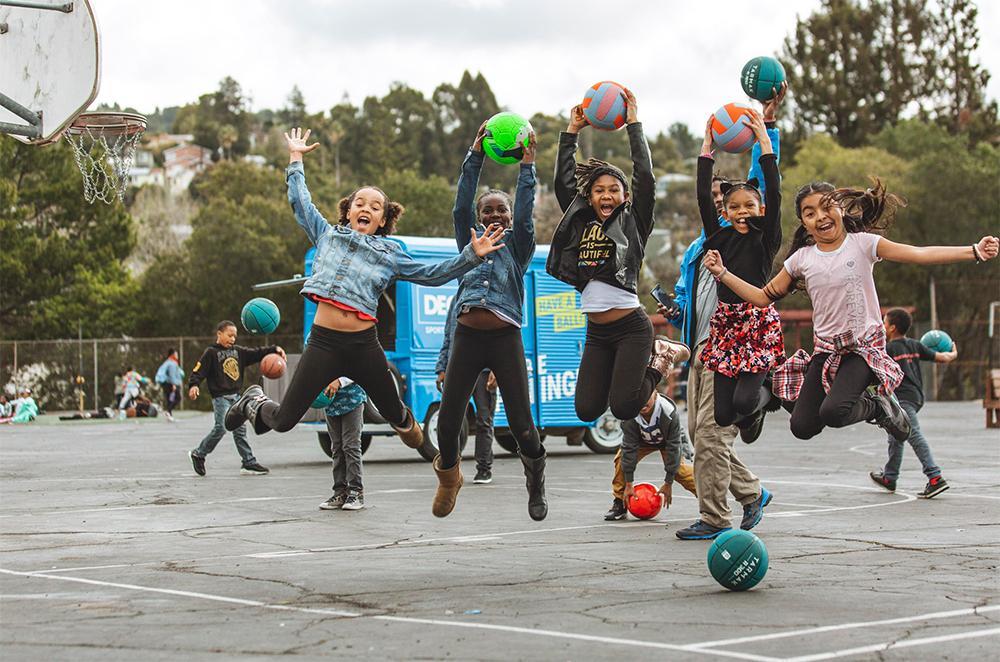
The beauty of Decathlon’s “Democratization” strategy, now famously encapsulated in their “Ready to Play?” mission, isn’t just about saving money; it’s about permission.
When a professional surfboard costs $600, you feel you need to identify as a “surfer” before you’re allowed to buy it. You need to be certain. But when a surfboard costs $150, or a Geologic bow costs $70, you have permission to be a “dabbler.” You can try it, be terrible at it, laugh about it, and maybe, just maybe, fall in love with it.
In 2026, Decathlon Canada is shifting the narrative from high-performance pressure to the simple joy of movement. The question for Canadians today isn’t “Can I afford to try this sport?” It’s “Which one am I trying this weekend?”