This article contains affiliate links. If you purchase or book through these links, we may earn a commission at no additional cost to you.
Introduction to Shopify’s AI Tools
Welcome to the era of autonomous online selling. E-commerce is no longer just about building a clean website and running manual marketing campaigns; it is about speed, hyper-personalization, and operational efficiency. At the absolute center of this shift is Shopify, which has evolved from a simple shopping cart platform into a deeply integrated, AI-driven retail ecosystem.
Imagine having an elite, data-driven executive assistant sitting in your dashboard 24/7, someone who can rewrite thousands of product descriptions in seconds, generate studio-grade lifestyle photography on demand, and negotiate customer support queries flawlessly without human intervention. With Shopify’s native suite of artificial intelligence tools, these capabilities are no longer premium luxuries reserved for enterprise brands. They are built-in features designed to help everyday merchants scale.
In this comprehensive guide, we’ll dive deep into Shopify’s latest native AI tools, explore actionable workflows, and show you exactly how to build a highly optimized, lean AI tech stack for your store.
Meet Sidekick: Your Native AI Commerce Assistant
The crown jewel of Shopify’s native intelligence suite is Sidekick, an embedded, deeply contextual AI assistant accessible directly inside your Shopify admin dashboard. Sidekick acts as a highly knowledgeable co-pilot that understands your specific store data, inventory, and theme configuration.
Unlike generic language models, Sidekick understands the direct mechanics of running a commerce business. You can use it via a simple conversational chat interface to execute complex tasks that used to take hours of manual clicking or custom code.
Actionable Sidekick Use Cases:
- Instant Data Analysis: Instead of exporting CSV files and building pivot tables, you can ask Sidekick: “Which of my product collections had the highest drop-off rate last month, and what discount code should I generate to re-engage those buyers?”
- Bulk Store Operations: You can issue macro commands like: “Put my entire winter apparel collection on a 15% discount, update the homepage banner text to announce the sale, and schedule it to end this Sunday at midnight.”
- Theme and Layout Optimization: If you want to refresh your store’s branding, you can instruct Sidekick to modify elements of your Shopify theme structure or suggest layout changes based on e-commerce best practices.
Expanding Shopify Magic: The Ultimate Content Engine
Shopify Magic is the suite of generative AI capabilities tightly integrated into the text editors and backend fields across your store. Writing high-converting, SEO-optimized copy for hundreds of stock-keeping units (SKUs) is notoriously time-consuming. Shopify Magic completely eliminates this bottleneck.
1. AI-Driven Product Descriptions
Inside any product page template, you can input a few basic feature bullet points, choose an explicit brand voice or tone (e.g., Sophisticated, Playful, Persuasive, or Urgent), and instantly generate a fully formatted description. Because it understands e-commerce context, it weaves in high-intent keywords naturally, boosting your on-page SEO layout without compromising readability.
2. Email Marketing and Newsletter Generation
Integrated directly into Shopify Email, Magic allows you to generate compelling email subject lines, body copy, and call-to-action buttons based on a brief prompt or an upcoming holiday promotion. It eliminates writer’s block and enables lean teams to launch high-converting campaigns in minutes.
3. Intelligent Blog Post Drafting
Maintaining an editorial or review blog is vital for driving organic affiliate and search engine traffic. Shopify Magic can outline and draft complete, relevant blog posts based on topics, targeted keywords, and your specified target audience, allowing you to scale your content marketing engine effortlessly.
Next-Gen AI Product Imagery: Studio Quality Without the Cost
One of the most powerful, high-impact features introduced to the Shopify dashboard is native AI Image Generation. Historically, producing high-end lifestyle images required hiring photographers, renting studios, and paying for tedious post-production editing.
Shopify’s built-in media editor completely democratizes this process:
- Instant Background Replacement: You can take a standard, plain product photo shot on a mobile phone against a white wall and use text prompts to place it in a premium setting, such as “resting on a marble kitchen countertop with soft morning sunlight” or “placed on a rustic wooden table surrounded by autumn leaves.”
- Flawless Image Compounding: The AI seamlessly matches the lighting, shadows, and reflections of your original product photo to the newly generated background environment, resulting in photorealistic, studio-grade marketing assets ready for your storefront and social media ads.
The Evolution of AI Customer Support
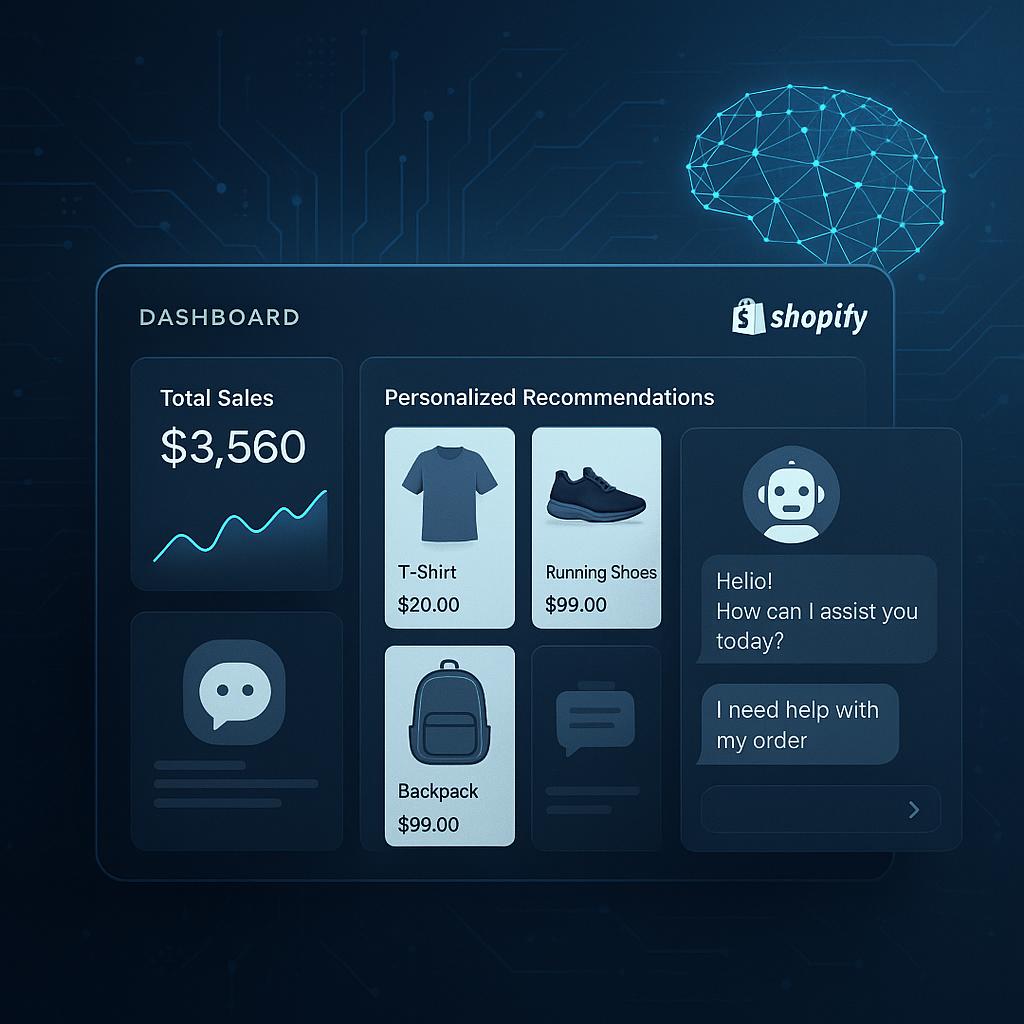
Customer support is a critical factor in conversion rate optimization and cart abandonment prevention. Standard, rule-based live chat tools often frustrate buyers with rigid, unhelpful menu options. Shopify’s current AI-driven support features bridge this gap.
Using native machine learning and deep store integrations, AI-powered support assistants can securely access real-time inventory counts, individual customer profiles, and active shipping carrier data.
When a user opens a chat bubble, the AI doesn’t just provide generic FAQ answers; it can autonomously look up a carrier tracking number, explain exact return policies based on the buyer’s geographic location, or dynamically recommend a matching accessory based on the items currently sitting in their shopping cart. This instantaneous, 24/7 conflict resolution keeps shoppers satisfied and driving forward through your checkout funnel.
Step-by-Step: AI Workflow Examples for High-Volume Stores
To maximize efficiency, smart sellers should combine these tools into automated workflows. Here are two practical examples of how these features synergize in a real e-commerce business model:
Workflow 1: The Instant Product Launch
- Sourcing & Media: You import a trending dropshipping item. You use Shopify’s AI Image Generator to replace the low-quality supplier photo with a premium lifestyle background.
- Copywriting: You prompt Shopify Magic to write a Persuasive product description optimized for search engines using targeted keywords.
- Launch Promotion: You ask Sidekick to generate a landing page block for the homepage and write a corresponding announcement newsletter inside Shopify Email to instantly blast to your subscribers.
Workflow 2: Automated Flash Sale Execution
- Setup: You tell Sidekick to run a weekend flash sale for a specific collection.
- Marketing Assets: You use Shopify Magic to auto-generate high-urgency cart notification text (e.g., “Sale ends in 4 hours!”).
- Support Prep: The integrated AI Customer Support assistant automatically updates its background knowledge base to handle real-time queries about the specific sale’s promotional terms and discount codes.
The Ultimate Beginner AI Stack

If you want to fully automate your e-commerce workflows without overwhelming your dashboard or bloating your software budget, implement this curated, lean AI stack:
| Tool Category | Software Solution | Primary Operational Focus |
| Co-Pilot & Operations | Shopify Sidekick | Native data analysis, bulk edits, and store setting automation. |
| Content Generation | Shopify Magic | Writing product descriptions, ad copy, and email marketing subject lines. |
| Visual Creative | Native Shopify Media Editor | Generative AI lifestyle background creation and image touch-ups. |
| Customer Retention | Klaviyo AI | Predictive analytics to track browse abandonment and optimal send times. |
| Support Automation | Shopify Inbox + AI Agents | Autonomous order tracking lookup and conversational customer care. |
Why Every Smart Seller Must Adapt
The e-commerce landscape has shifted from a race of pure manual labor to a race of sheer efficiency. Merchants who continue to spend hours writing basic copy, manually editing photo backgrounds, or building individual spreadsheets will simply be out-paced by agile, AI-leveraged competitors.
By embracing Shopify’s native AI features; Sidekick, Magic, advanced image generation, and intelligent support engines; you free yourself from repetitive backend tasks. This allows you to step away from the daily operational grind and focus entirely on high-level growth initiatives, partner acquisition, and product development. The tools are already sitting right inside your dashboard, it is time to put them to work.